Apr 25 2013

An open letter in support of removing PETA’s ‘animal shelter’ designation
Valerie Hayes
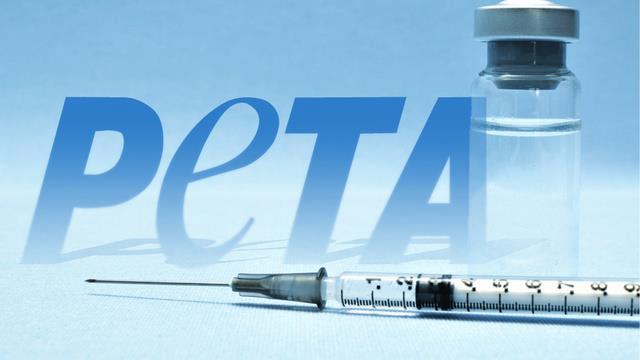
PETA needle
Below is a version of emails I sent to Commissioner Lohr and Dr. Dan Kovich of VDACS.  I encourage everyone who cares about animals and people to write to them as well in support of the No Kill Advocacy Center’s petition to remove PETA’s designation as an ‘animal shelter’.  Other than employees of animal shelters, only licensed veterinarians can legally euthanize or kill pets, so removing the shelter designation would remove the cover under which PETA kills thousands of healthy and treatable pets every year, leaving them with nary a lettuce bikini to hide it behind.  A shelter is supposed to be a place for adoptions, not a place of mass killings.

If you haven’t already, please take a few minutes to send your own emails to Commissioner Lohr: matt.lohr@vdacs.virginia.gov  and to Dr. Kovich: dan.kovich@vdacs.virginia.gov, because enough is enough.

Dear Sirs,

On June 15, 2013, it will be eight years since the real PETA was revealed to the world.  I am talking, of course, about the Piggly Wiggly Dumpster Incident and subsequent trial.  Since learning the painful truth about how an organization claiming to work on behalf of the rights of animals instead perverts the definitions of ‘rights’, ‘ethical’, and ‘animal shelter’ by seeking out and killing thousands of healthy and treatable pets every year, I have done what I can to spread the word, in hope that the more voices raised against this perversion, the sooner it would come to an end.

You have the power to put an end to it by granting the petition filed by the No Kill Advocacy Center, and I implore you to do so.  Your state’s own shelter statistics reporting webpage shows that many of Virginia’s shelters and rescues are capable of great things and save many lives (and on budgets a tiny fraction of PETA’s).  Your own findings in your site visit of almost two years ago show that PETA does not even have proper facilities nor the inclination to house and adopt out pets.  Some of Virginia’s open-admission animal control shelters save an impressive 90% or more of the animals they take in and more are working towards that admirable and achievable goal.  PETA, with its wealth, national reach, and claim to be a leading voice for animal rights, should be leading the way in saving the lives of lost and homeless pets, yet it uses its wealth and its platform to fight against saving these animals and seeing them into new homes.  They are perverts.  To them a shelter designation is nothing else but a license to kill.  Please take their license to kill away.

As a witness to the creation of the first No Kill community in the nation, I am well aware of, and profoundly concerned with the negative effects that the needless killing of homeless pets has on individual people and on the community at large.  Allowing PETA to keep it’s shelter designation would not only be fatal to thousands of healthy and treatable pets every year, but would also be very bad for people as well.  It is bad for the people who are deprived of an opportunity to adopt those animals and share their lives with them.  It is bad for the people who surrender animals to PETA, having been led to believe that “the world’s leading voice for animal rights” would find them a good home.  Why should anyone have to face that betrayal?  It is bad for the animal rescuers and the staffs and volunteers of shelters targeted by PETA in their twisted little war on the No Kill movement.  Those people work hard to better the plight of homeless animals and seek to do all they can for the animals in front of them, animals that PETA would kill within minutes to further their sick agenda.  It is bad for the people who go to work for PETA, perhaps with the good intention of making the world better for animals, and who instead end up allowing themselves to be manipulated into becoming those who seek out and kill healthy and treatable pets and make no effort to find them homes–perhaps the worst possible perversion of their better selves.  What does the future hold for them?  Why should this organization be allowed to destroy their souls?

There is a better way.  Please remove PETA’s designation as an animal shelter.  Please take away their license to kill animals and to cut a destructive swath through the community of animal lovers.

Sure, they’ll make a ruckus about it, but so what?  The shouts of joy from real animal lovers across the country and around the globe will drown it out.

Sincerely,
Valerie Hayes

Feb 2 2013

Groundhog Day, again

Valerie Hayes

It’s Groundhog Day again and apparently our friends over in that bizarre parallel universe otherwise known as PETA still don’t like my robot idea. Some things never change. The piece below was originally published 3 years ago. In the 1096 days since then, more than 80 additional communities have achieved save rates of 90% or higher, accomplishing tremendous things on budgets a tiny fraction of PETA’s, despite the very serious disadvantage of being nothing but a bunch of cleverly disguised hoarders and dogfighters, while the kind folks at PETA continue to kill over 90% of the pets they get their morally superior hands on.  

It doesn’t make any sense to me either.

A modest proposal: PETA should ‘euthanize’ only animatronic dogs and cats


ol blue-robot dog

top A robotic dog is the perfect solution to PETA’s use of the ‘blue solution’.
Sculpture created by Paul Loughridge

People for the Ethical Treatment of Animals (PETA) has once again made headlines for suggesting the use of animatronic technology as a means of protecting animals, this time suggesting that Punxsutawney Phil be replaced with a robotic groundhog, on the grounds that having an actual groundhog pop his head out of a hole in front of an audience once a year is a form of animal cruelty.  They had earlier suggested that UGA replace its mascot with ‘robodawg’ after the untimely passing of Uga’s most recent incarnation.  Additionally, PETA has produced a video in which robotic cats attempt to make robotic kittens.  Clearly they are aware of the great potential this technology has for the protection of animals, but they are overlooking one use which would save thousands of dogs and cats every year, and it’s right there in front of them.  It is so obvious, how could they not see it?

PETA kills thousands of pets every year, and many, if not most of these pets would be deemed adoptable by a No Kill shelter.  No Kill shelters save 90% or more of the animals that come through their doors, whether or not they are open-admission.  PETA, by contrast, seeks out andkills over 90% of the animals they get their hands on.  In 2006, they killed 97%.  In 2007, they killed 91%.  In 2008, they killed 96%.  There is no reason to believe that 2009 will be any different once the numbers are finally released.*

If PETA were to switch to ‘euthanizing’ robotic dogs and cats (and the occasional chicken), rather than killing actual living, breathing dogs and cats (and the occasional chicken), literally thousands of animal lives would be saved every year.  Rescuing could be left to real rescuers.  That infamous walk-in freezer at PETA headquarters could instead be filled with tofu burgers.  PETA could inject Fatal-Plus into robots while the cameras roll.  It would be great publicity.  The technology would be very simple, since the robots wouldn’t need to do anything fancier than play dead.  They could be reused time and again, which would be much more environmentally friendly than  filling up dumpsters with dead pets.  The money saved by eliminating the need to cremate tons of dead pets could be spent on spay-neuter assistance, or on more  ads featuring naked celebrities.

If PETA would only stick its collective head out of its collective hole, it could catch a glimpse of the growing No Kill movement.

Everyone would live happily ever after.

*Note: The pertinent numbers to look at in these data are the numbers of animals taken in for adoption and the numbers of animals killed.  PETA habitually includes animals brought to its spay-neuter clinic for surgery to obfuscate the true gravity of its statistics.  When calculating the kill rate, the animals brought for surgery were, of course, left out.

Let PETA know about the benefits of ‘euthanizing’ robotic pets:

People for the Ethical Treatment of Animals

501 Front Street

Norfolk VA 23510

info@peta.org
(757) 622-7382


Having convinced themselves that rounding up and killing healthy and treatable pets is somehow vegan, the staff and supporters of PETA try to keep the awful truth from the animal lovers who contribute to their $30 million budget, but more and more people are finding out, and they are having to try harder and harder.  On rare occasions they publicize a rescue, real or imagined, and then offer the animal up for adoption, real or imagined–the truth being rarer than unicorns in PETA-land.  Mostly they just lie about the nature of what they do.  

Someday, PETA will stop rounding up and killing pets, and getting there will be a very interesting process, in the “may you live in interesting times” sense of the word “interesting.  It won’t involve the sudden realization that what they have been doing is wrong and that there is a better way, because they already know both of those things on some level and that knowledge has not stopped them from unfettered killing.  If you’re looking for integrity, don’t look at PETA.  Will that day be brought about by legislation?  Loss of funds?  Legal action?  A complete turnover of personnel?  Those things will take years and the animals that fall into their hands need people to intervene on their behalf now.

Please do take a moment or two to ask PETA to switch to killing robots.  

And while PETA does not have a Petfinder site and doesn’t typically advertise pets for adoption, they do have an adoption application.  It isn’t easy to come by, but now you can download a copy here.    A pretty unimpressive Word document, but it is interesting that they ask “How many companion animals do you own now? ” and ”How long you have owned him/her”  (emphasis added).  I thought they only liked ownership when they could use it to sneak out of some legal hot water.  Also “Where is the animal now?”  A coarsely-phrased but interesting question, coming from people who, if they were honest, would have to answer many thousands of times over:  ”in some landfill somewhere”.  I admit that I find the thought  of  telling those people any personal information rather creepy, but I can’t help but wonder what would happen if PETA were to suddenly start receiving adoption applications from people informed about what PETA really is?  Would they be ignored?  Would applicants be opening themselves up for harassment?  Would they be placing their pets at risk?  How would this all look?  

How do any animals get out of there alive?

I find it creepy because the whole thing is so lopsided with a hefty dose of crazy added for good measure.  In a No Kill community, a shelter is a positive part of the community, and has to earn its trust every day.  Fortunately, earning trust  is a natural part of taking in lost and homeless pets and reuniting them with their families of finding them new ones, providing sick and injured animals with medical care and a clean place to stay, treating volunteers with respect, and so forth.  You can expect you adoption application to be handled in a professional manner in a No Kill community.   PETA is the exact opposite of all that.  They do all manner of crazy things and answer to no one.

So, what to do with the adoption application?  I have a couple of  ideas:

  1. Apply to adopt,  if you dare.
  2. Spread the word.  Share the application around.  Here it is again.  If you prefer a pdf, here you go.  Put it up on twitter, Facebook, Pinterest, tumblr, wherever.  Let people know that it exists.  Let people know the truth about PETA.  Let them know that the staff and supporters of PETA want their killing of thousands of healthy and treatable pets to remain invisible.


Click  here for the original article.


Sep 24 2012

When is a black cat like a unicorn?

Valerie Hayes

Now may be your chance to adopt a creature so rare, few have ever seen one.  Only a handful of these creatures come into existence each year, and how they do so is is a mystery.  They are so rare, that some question that they exist at all.

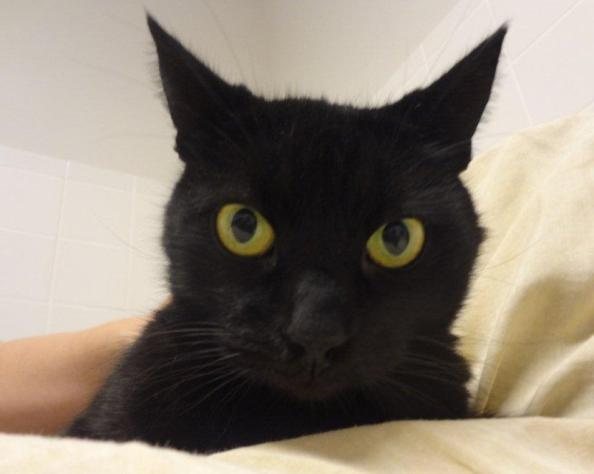
Here’s a picture of the animal in question:

Midnight, a cat up for adoption from PETA.

Midnight, one of the rarest of the rare.

You may be thinking that I’ve lost my mind.  ”That is a black cat.  My local shelter and rescue groups have dozens of black cats available for adoption,”  you say.

Ah, yes.  Midnight, if she is even real,  is different.  Very, very different.

Midnight is apparently being offered for adoption by PETA.

Yes, PETA, the folks who brought you the Piggly Wiggly Dumpster Incident in 2005.  The ones who brought you the Woo-Hoo You’re Gonna Kill Again! Gift Basket Incident last month.  The ones who support continued killing and viciously attack No Kill efforts.  The ones who have killed nearly every pet they have gotten their hands on in 20042005, 2006, 20072008, 20092010, and 2011.*   They’ve killed over 25,000 healthy and treatable pets in the past ten years, and they show no sign of intending to slow down or stop.  Some consider PETA to be a destructive cult.

Given this backdrop of death, untrustworthiness,  and downright craziness, you’ll have to excuse me for being a bit skeptical.

  • The story and pictures are pretty generic, as is the cat’s name.  It seems to cater to the uncritical.
  • There are no external links to news stories of the rescue which would confirm it’s validity.
  • Midnight is a black cat, which means she lacks the unique identifying markings one would see on a calico, piebald, tortoiseshell, or even tuxedo cat.  The pictures could be any black cat.  This would make any ‘proof of life’ questionable.
  • Why wouldn’t the cat just climb back down the tree on her own power?  The picture of the cat in the tree shows what looks like an easy climb for a cat able-bodied enough to get up on her own power.
  • Surviving ten days up a tree without water sounds a bit far-fetched to me.  Even if the cat could lick dew-drops off of the leaves (assuming there were any dew-drops), I doubt it would be enough to sustain life for ten days.
  • Is this story a reaction to criticism about PETA’s extraordinarily high kill rate?  It looks like an attempt to distract their membership to me–something to point to and say “we do too adopt out animals” diverting attention from the infamous walk-in freezer.
  • Perhaps they are trying to prove to themselves that they are good people.  That is after all, a fundamental human need.  Allowing the occasional animal out alive may serve that purpose, even as they kill thousands of others.
  • Midnight’s owners are portrayed as the stereotypical uncaring owners that PETA would like its supporters to believe are so prevalent.  People like that are actually the exception, not the rule.  PETA’s take on humanity lacks nuance.

So, I have a few questions:

  •  How true is this story?  Is it partly or completely made up?
  • If there is any truth to it, is Midnight still alive?
  • What does a PETA adoption application look like?
  • If Midnight is real, then how did she get chosen for the rare privilege of surviving PETA?   What sealed the deal?  Was it her inability to climb down a tree?  Her camel-like ability to survive without water?
  • What is stopping PETA from advertising all the other animals they take in to their “facilities”–all those dogs and cats and bunnies and others they keep invisible to the animal-loving public, the ones that leave 501 Front Street via the freezer?

But, hey, you never know.  If you are a cat lover with a penchant for cryptozoology, you might want to adopt Nessie Midnight:

Now Midnight is settling in at PETA’s Norfolk, Virginia, headquarters and is waiting patiently for the right adoptive family. She will be microchipped and spayed before adoption. If you are ready to make a lifetime commitment and give Midnight the safe, loving home that every cat deserves, please e-mail Adopt@peta.org.

If you succeed, or if you know anything about this cat, I’d like to hear from you.

*Oddly, the 2009 stats don’t appear to be properly posted on the VDACS site (maintained by the state of Virginia where PETA is headquartered).  They are available in the article to which I linked, however.  A word about the numbers reported:

You’ll notice that there are a lot of animals listed in the categories “others” and “reclaimed by owner”. Those are animals that were brought in for spay-neuter surgery. They were never taken in “for purposes of adoption” and so should not be included in these statistics, but they are, because PETA wants to conceal the true gravity of its statistics. The pertinent numbers are in the columns “surrendered by owner” and “euthanized”. You’ll notice that these two numbers are very similar. That’s because PETA kills most of the animals it takes in “for purposes of adoption”.

You can compare PETA’s statistics to those of other agencies in Virginia by changing the agency identification number in the url (i.e. …fac_num=157… identifies PETA). In keeping with the ‘license to kill’ theme, let’s try ‘007’. That gives us the statistics for an organization called SOS-SAFE, or Saving Animals from Euthanasia. How about that? You’ll find that their numbers are quite a bit different from PETA’s.


Feb 27 2012

The real PETA letter

Valerie Hayes

Guest post courtesy of Alison Hector.

We have recently uncovered the original draft of the letter Mayor Tomlinson of Columbus, GA was so thrilled to receive from PETA.

Here it is:

Dear Mayor Tomlinson,

We hope we find you and not your shelter pets well. We at PETA followed with interest recent news reports regarding the Columbus Animal Shelter and public pressure to lower your euthanasia rates. How dare they! Even though you committed to a Save-A-Pet program you can still do a 180 and kill many more without losing supporters. We are expert at this and will show you how. I (Ingrid) I mean we, are enclosing information we hope will be helpful in killing many more pets.

Please excuse the delay (unfortunately the rescues got more adopted until we could intervene) – I tried numerous times (we make killing more pets a priority!) to send the info via email.   I even used our top-secret hotmail account (we are used to being blocked *no worries* since 9/11 and the crackdown on terrorists :) Even your assistant Lacey couldn’t help – and thankfully your staff’s incompetence will make our mission of death easier. Someone said maybe our emails were returned “undeliverable” because God was telling us something. Ya think? Nah.

Unfortunately on a daily basis we get many reports (we view them as complaints) of shelters trying to lower their “euthanasia” (wink) rates. They are individuals and groups very familiar with the inner (i.e. devious) working of slaughterhouses, (and boy do we know slaughterhouses!) but, they are unfamiliar with the daily challenges (like juggling playing on Facebook while talking on personal calls while pretending to feed or care for animals) and the daily heartbreaks–NO, not of taking the lives of frightened adorable kittens and puppies–but of having those pesky volunteers setting a bad example of actually cleaning cages and socializing the pets so that the paid workers may actually have to do that too if anyone from the “outside” (a.k.a. irresponsible evil public) happens to come by despite your best efforts to keep them out.

We know the “troublesome policies” the volunteers (and rarely shelter workers) try to implement, like providing medical care, bathing the pets, calling and finding rescues, securing foster homes, and finding innovative ways to market your trash pets. Yes, it is less expensive, but we know that the money is better spent buying Fatal-Plus so we can rid the earth of the vermin you all call pets (oops I let the cat out of the bag).

What you really must keep quiet from these nincompoops is how you are so generously donating live cats and dogs to universities and labs. I mean it is fine with us, (just don’t you DARE try it with a chicken or we may bomb you) but we have learned this is the public’s Achilles Heel and have milked it for all it’s worth (which is literally millions in donations to us).

Between you and me, we know that the policies of No Kill EXTREMISTS work and only too well. They however, burden your paid workers with time expenditures that could be better spent on their coffee breaks (while listening to cats stuck dying in walls) or killing more in the quest to rid the earth of vermin cute dogs and cats. So to assist you in covering up the assembly line of death, we have discovered some clever phrases that the moronic public (yeah, we hate people too!) will buy because we twist the facts and make No Kill EXTREMISTS look like the bad guys! It is ingenious!

Just learn and repeat these simple phrases that will mislead the public into helping you kill many more. I know it sounds ludicrous and honestly can’t believe they keep buying it LOL, but we can actually convince them that killing is kindness and death better than life. We have done it many times–don’t worry it works like a charm. These are the magic “bullets” (get it–bullets) that you too can use to trick them with:

“Warehousing” –keeping animals for months (months lol) is inhumane. (Don’t worry, the moronic public just has to hear the word “inhumane” and won’t question your actual practices like killing every pet they can within 5 days or less. We also fight legislation that would make your real actions transparent so they will never know)

“Cramped cages that promote disease”– again don’t worry–the public won’t stop to question why their tax dollars are used on cramped cages and why you aren’t using proper disinfection as you only do it (if at all) when supplies are “donated” lmao. (Brilliant, and yes, we saw your Open Records Request by that pesky lawyer and that is why we are especially interested in intervening.) They won’t question why your vet literally never touches the pets to examine or alleviate pain and the only time she handles them is to kill them (bless her), or that you don’t routinely vaccinate because you are killing them faster than we can don a KKK costume.  Or that your facility is actually quite modern and beautiful with lots of large runs that hold at least 132 dogs and many cats.  Just remember:   you are doing GREAT–you already have a 95% kill rate for cats and kittens!

We acknowledge that other than the psychos that are drawn to the position because they enjoy killing (a.k.a. “euthanasia” LOL) the other workers may not want to do it. Not because they have the pets’ best interests at heart and actually care if they live or find homes–heavens no–simply because it is another chore they are too lazy to do.  (Albeit preferable to cleaning and actually taking care of the pets)

Other terms the morons (a.k.a. the public and media) glom onto are:

  • “sad reality”
  • “downturn in the economy”
  • “being kept alive with little or no hope for adoption”
  • getting less adoptable each day(What does that even mean? Do pets come with an expiration date? LOL–Oh that’s right they do at your shelter ;) ) Don’t worry, they won’t question the fact that we don’t have a crystal ball as to which family is a good fit for a pet and when; and that 28 open admission shelters across the country, many far larger than you in intake, are getting 90% and over adopted every day.  Never mind that the majority of pets, especially dogs, are simply lost and you make almost no efforts to reunite them with their families.  Congrats on missing those stupid microchips!Also:
  • “Hoarders” is a great label to put on every rescue (a.k.a. the people saving and adopting out the pets that you take credit for).  Although we know Columbus has had maybe one case in the past five years. (We like to put “rescues” in quotes because it keeps perpetuating the fraud that communities can’t adopt their way out of the contrived “pet overpopulation”. Yes you know that we know that there are 28 open admission shelters that do it every day but shhhh. We need the public to turn against the only hope your shelter animals have.)
  • “Animal abusers” is another good one too, since they won’t inquire as to why, if you are investigating cruelty, (other than your own, of course) you never keep the confiscated animals for 30 days as required by law if it were true. We know it is not happening much if at all in Columbus but shhhh your secret is safe with us! (We couldn’t find one case. Darn.))
  • Then there is my personal fav, the old tired refrain “there are too many pets and not enough homes”. Never mind that this phrase was coined like 100 years ago and since that time everything has evolved and changed.  We have accomplished miracles like flying into outer space and face transplants, yet they never seem to catch on that, despite much evidence to the contrary it is just our excuse to kill as many pets as possible!

We know from experience the general public probably has not read all the research and surveys showing that 97% of the pet owning American public treat their pets like family and even in troubled times spend billions per year on them. They also won’t catch on that there are 17 million people looking for a new pet each year and only 3–4 million are killed showing there is NO pet overpopulation.
 
Even if they do catch on that everything we do (along with our brethren, HSUS and the ASPCA) is to pull your heart strings to collect $ for us and not to save your disgusting beasts, it still won’t sink in. 

A good friend of mine who wrote an article about me “The Extremist” (I suggested the title as we make sure the public applauds us as brave heroes with that label even as we use it against those sissy No Kill advocates.)  Michael Specter also nailed why the public will keep turning a blind eye: “Denialism is denial writ large—when an entire segment of society, often struggling with the trauma of change, turns away from reality in favor of a more comfortable lie.

We are enclosing some links to “prove” (with intentionally distorted information), that No Kill is very, very bad, as we really want to make sure no pet is left alive. 

So keep up the great work!  And, remember just keep uttering the word “inhumane,” it works EVERY time. 

If you need anything, we have plenty of money, so don’t hesitate to ask. We are a little low on our Fatal-Plus, however, since we use it on 98% of the pets we “rescue” (yes we are the “rescue” in quotes I referred to above).  I could offer to make a grant to pay for spay-neuter or offer real assistance to the shelter …Nah!  I want those critters dead, especially the feral cats and pit bulls! 

Your new best friend,

Ingrid Jennifer Brown, “Shelter Advisor from the Cruelty Investigations Department”

I know. I know. We can’t stop laughing either.


PETA-Dumpster-vs-Crate

Which is more humane, crate training or killing and dumping? Which is more consistent with the concept of animal rights?


Feb 24 2012

PETA went down to Georgia

Valerie Hayes

Think PETA cares about homeless pets?

Think again.

Let me get my violin.

PETA went down to Georgia, they were looking for some souls to steal.
Ingrid’s in a bind ‘cos she’s way behind and she’s willin’ to make a deal.
When she came across some people savin’ animals and bloggin’ on the ‘net.
So she jumped up on a Piggly Wiggly dumpster and said: “Mayor, let me tell you what:
“I guess you didn’t know it, but I’m an animal killer too.
“And if you’d care to take a dare, I’ll make a bet with you.
“Now you tell some a pretty good lies, Mayor, but give Old Ingrid her due:
“I bet a needle of gold against your soul, ‘cos I think I’m better than you.”
The people said: “We’re just regular folks, and it might be a sin,
“But if she takes your bet, she’s gonna regret, ‘cos we’re the best that’s ever been.”

Mayor, you do your “research” and fight those advocates hard.
‘Cos hell’s broke loose in Georgia and the PETA don’t deal the cards.
And if you win you get this shiny needle made of gold.
But if you lose, well, either way, the Butcher of Norfolk gets your soul.

Old Ingrid opened up her case and she said: “I’ll start this show.”
And fire flew from her fingertips as she pulled up the blue juice, you know.
Then she pushed the plunger down and it made an evil hiss.
And a band of morons joined in and it sounded something like this:

[Hoarders! Dogfighters! Irresponsible public! Pit bulls! Feral cats! Pet overpopulation! We have to kill! Kill! Kill! Kill! KILL!!!]


When she’d finished, the people said: “Well, if it was about money, you’dve won.
“But sit down in that chair, right there, and let us show you how it’s done.”

Feral cats in the community?  T-N-R
Puppies in homes gettin’ foster care.
Volunteers at an offsite, adoptin’ out pets.
“Boss, are we done now?”
“No, not, yet.”

Old Ingrid wouldn’t bow her head, couldn’t admit that she’d been beat.
She snatched that golden needle from the ground at the Mayor’s feet.
The people said: “PETA, just come on back if you ever want to try again.
‘cause we done told you once, you son of a bitch (no offense to female dogs), we’re the best that’s ever been.”

And they went: Feral cats in the community? T-N-R
Puppies in homes gettin’ foster care.
Volunteers at an offsite, adoptin’ out pets.
“Boss, are we done now?”
“No, not, yet.”

"I bet a needle of gold against your soul, 'cos I think I'm better than you."

"I bet a needle of gold against your soul, 'cos I think I'm better than you."

With apologies to the great Charlie Daniels.


Feb 24 2012

Truth is stranger than fiction, or: When a Georgia politician cites PETA as a reason to kill shelter pets

Valerie Hayes

“The most potent and cost-effective outreach vehicle is the development of a creative volunteer program. Were shelters to place a high priority on this area through attracting, training, and skillfully utilizing a volunteer outreach corps, they could begin the transition from killing site to a community resource center. A true shelter should be a place where life is affirmed, both in teaching and practice, not a building permeated with the odor of death”  ~Ed Duvin, “In the name of mercy,” 1989

Lexie

Lexie was killed in Columbus, GA this week despite being friendly and having an adoption committment.

PETA has some advice for communities looking to end the population-control killing of homeless pets:  keep right on killing.

My head hurts.  My heart hurts.  I am not surprised.

Some weeks have a theme.  This week’s theme has been cognitive dissonance, that feeling you get when presented with inconceivably mind-bending scenarios. It can lead to a search for answers, a further exploration and questioning of oneself and the world, to a desire to reshape the world and oneself, or it can lead to a distortion of thought, forcing it to fit where it does not.  What you choose to do with it makes all the difference in the world.

To become a No Kill advocate is to step through the looking glass of animal welfare, into a world where what is is so often the opposite of what is logical, just, and common sense.  Every day is filled with cognitive dissonance.  Killing is kindness.  Nobody wants to kill, yet shelters kill 3-4 million pets every year—half of all they take in.  Shelters kill animals with rescue on the way.  People calling themselves animal lovers make excuses for these things.  Killing healthy and treatable and friendly pets is “euthanasia.”  We call the places that do the killing “shelters.”  Pets are labeled “unwanted,” blaming them for their own killing.  And so on, and so on.

And the organization billing itself as the “largest animal rights organization in the world,” the one known for extremism in advocating against the wearing of fur, the eating of meat, and the testing of cosmetics on animals, the one known for its founder’s statement that “animals are not ours to eat, wear or experiment on,” the one for which no ad campaign in the name of veganism is too tasteless, makes excuses for the killing of homeless pets, advocates the killing of homeless pets, and kills thousands of homeless pets every year.

How do “animal rights” and “needless killing” manage to peacefully coexist within the same organization and within the individuals that comprise it?  The right to live is fundamental to all others.  Without that, there are no other rights.  How are they unable to see the hypocrisy of this, even when it is pointed out to them repeatedly, even when the evidence piles as high as the stack of dead bodies in that infamous walk-in freezer?  How do they recognize the role cognitive dissonance plays in how other people justify what they do to animals, choosing to keep the same old beliefs when confronted with conflicting information, yet can’t see it in themselves?

Up is down and black is white.

The excuses are a slow-moving target, but a moving target nonetheless.  There’s the irresponsible public, which has enjoyed perhaps the longest popularity–over 35 years; pet overpopulation, another classic; and, more recently the notion that animal rescue is often a front for hoarding and dog fighting has been on the ascent, perhaps as the previous two are losing some of their old appeal.  These excuses all have a few things in common—they are false—myths created from gross exaggerations and deliberate misrepresentations, but with small grains of truth that have given them traction.  A minority of pet owners are irresponsible, that is true, and those who work in shelters or rescue will see a disproportionate number of this minority, but that is not why shelters kill.  There are a lot of homeless animals, but that is not the same thing as ‘overpopulation.’  Hoarding and dog fighting exist, but to say that they are epidemic in animal rescue is nothing but a lie concocted to serve a nefarious purpose.

Hoarding is a mental illness, and hoarding of animals is a relatively rare mental illness.  Mental health experts have yet to reach a consensus as to its underlying cause.  Animal hoarding cases receive an increasing amount of media attention because they are so freakish and unusual.  A search of the Pet-Abuse website, a site that tracks all manner of cases of pet abuse, for hoarding cases* with the keyword ‘Georgia’ yielded 12 cases in the entire state in over 10 years.  Of those, two involved rescue—one was a volunteer (but not a foster care volunteer) at a rescue, the other, was the Loonie Farms case.

The state of Georgia, unlike many, requires that animal shelters and rescues be licensed and inspected by the Department of Agriculture.  There are currently over 400 nonprofit rescue groups licensed in Georgia.  Suffice to say, that rescue hoarding is very, very rare.

Shelter killing is commonplace.  A report prepared by the Georgia Voters for Animal Welfare estimates that Georgia’s taxpayer-funded animal control shelters kill 62% of the animals they take in–260,000 dogs and cats every year, so in the past 10 years, Georgia shelters killed upwards of 2.6 million animals. (The overall trend nationwide is that killing is declining, so would likely have been even higher in the years prior to the GVAW report.)  Many thousands of animals die in Georgia shelters for every one that may end up in these bad rescue situations.

And how many dogfighters would want to get a rescue license from the Department of Agriculture and deal with paperwork and inspections so that they could pull animals from shelters when they could steal them or get them from ‘free-to-good homes’ ads?  Clearly these risks are grossly overstated.

Which brings me to a letter sent from PETA to Mayor Teresa Tomlinson of Columbus, GA.  You can read it by clicking here.  Apparently the No kill advocacy going on in Columbus caught PETA’s attention and they wanted to offer the beleaguered mayor some advice that only an organization that kills nearly every animal they get their hands on can.  They hope their letter finds her well.  They always hope their letters find the recipient well.  It’s like they don’t have the social skills or brainpower to come up with a different opening line.

Things have been heating up in Columbus in recent months as a growing number of its citizens become aware of the mismanagement and rampant killing there, and of the fact that there is a better way.  This past week a dog named Lexie was killed despite having an adoption commitment.  Further background on the Columbus situation is available here, here, and here.  The local TV station aired this piece recently, and the public response to it led to another one airing February 22 in which the Mayor cited this letter from PETA as support for her claim that not killing would be harmful to animals.

And this during not just any week, but the very week that PETA’s own kill stats for 2011 were released.  PETA kills the animals it seeks out and takes in to its Bates Motel for pets so-called shelter (they alternately refer to it as a ‘shelter’ or an ‘office building,’ depending on the situation) at a rate of 97%–far worse than all but a handful of Georgia animal controls.  This is despite, or perhaps because of its budget of over $30 million.  Bill yourself as a champion of rights, build a relentless publicity machine, and you too can get away with murder.

In 2011, PETA took in 2029 animals (mostly dogs and cats, and some “other” animals such as rabbits) “for purpose of adoption.”  They killed 1965 of them.  Only 28 were adopted and 11 reclaimed. PETA transferred 34 to kill shelters, where they may or may not have been adopted and other animals may or may not have been killed to make room for them.  PETA’s adoption rate in 2011 was 1.4%.  One-point-four percent. 97% went on to occupy the walk-in freezer in PETA’s headquarters.  Keep in mind that over 90% of pets entering shelters are healthy or treatable, and there is no evidence that the pets taken in and killed by PETA are any different.  PETA has been consistently unable to produce evidence otherwise, even when pointedly asked.

PETA would prefer that the status quo continue.  Though they apparently aren’t aware that rescues are licensed and inspected in GA, they disparage concerned citizens, animal rescuers and  No Kill advocates (some of whom are or have been shelter directors themselves) as “individuals and groups unfamiliar with the inner workings of animal care and control facilities (or the daily challenges and heartbreaks that shelter workers face).”  Really?  What is it about these “inner workings” that cannot be understood by ordinary people not inducted into the mysteries?  They don’t explain that but present a collection of straw men, falsehoods and a couple of articles, one of them poorly written fear mongering about hoarding, the other one they apparently didn’t read very carefully.  It concludes with the story of how Best Friends, perhaps the best-known no-kill animal sanctuary in the country, and host of the annual No More Homeless Pets Conference, orchestrated rescue and adoption for the hundreds of feline victims of the FLOCK hoarding case in Pahrump, NV.

They cite cases where No Kill has not succeeded, but fail to mention that none of those were following the No Kill Equation, the only proven method for ending population control killing in open-admission shelters.  They ignore the growing list of communities where No Kill is succeeding—28 as of this writing.  They ignore that we have known that it can be done for almost 11 years.

The letter is signed by Jennifer Brown, who notes that she can be reached at (630)966-8895 or JenniferB@peta.org.

On one side we have the product of the nation’s oldest animal welfare organization, the ASPCA’s Tactics of the Extremist Agenda, and on the other the product of an organization over 100 years younger, one that prides itself on being seen as extremist in the name of animal rights, yet which kills and rehashes excuses for killing that mostly date from before it was founded.  PETA has nothing of substance to offer.  It is weak, derivative and backward, trading off the false image it has crafted.

Why would anyone want to take advice (and say so on TV!) on animal sheltering from an organization, which, despite a budget of over $30 million, has an even worse kill rate than all but a very few in Georgia?  Why align oneself with an organization that is unpopular with those who don’t care about animals and is doubly so with informed people who care about homeless pets?  Why do so while claiming to be “the most progressive”?  That is not a winning situation no matter how you look at it.

PETA anti-TNR ad

PETA uses lies to try to prevent a bill that would clarify that TNR, the most humane and effective way of managing feral cat populations, is not prohibited in Virginia.

Ed Duvin, who sparked the No Kill movement with his 1989 essay “In the Name of Mercy,” could have been rebutting PETA’s campaign against the No Kill movement in general, and against Virginia’s S.B 359 in particular when he wrote “Speciesism:  Alive and Well”.  Heck, I hope this finds them well:

“Instead of recognizing our movement’s historical and contemporary role in this holocaust, many leaders continue to rationalize it on the basis of a “humane” death being preferable to a “miserable” life – further arguing that we are best able to provide this “merciful” end. Desperate humans are grievously suffering by the tens of millions all over the world, but who can imagine relief agencies endorsing systematic euthanasia as an acceptable policy. A vastly different ethic applies for companion animals, however, and most of our movement remains silent.”

And:

“Deciding that death for other beings is preferable to a risk-filled life is not euthanasia in its traditional form, but rather a lethal manifestation of speciesism that projects our own fears and values onto another species, and then proclaims – as though we were omniscient gods – that death is our loving “gift” to them.”

And:

“A recent issue of the leading shelter publication spared no effort in denigrating progressive programs to support feral cats. The thrust of this dogmatic criticism was that euthanasia is preferable to neuter-and release programs, claiming such programs expose ferals to the risk of “terrifying lives and tragic deaths.” Here again, we see the “kill, kill, kill” mentality – arrogantly presuming that certain death is a kinder fate for ferals than uncertain life. How ironic, as Thoreau pointed out, that the most desperate lives are lived quietly by humans, and yet no one is euthanizing us for our own protection!”

And:

“During the past few years, I have witnessed more anger from the Shelter Establishment directed at critics than the grotesque slaughter, and this sorrowful lack of priority and proportion is indicative of a malignancy in the soul of our movement.”

The thing is, he wrote that back in 1990.  It’s 2012 and they still don’t get it.

If you are from Virginia, please join Alley Cat Allies, No Kill advocates, and some of the best-performing shelters in the country in voicing your support for S.B. 359, which clarifies that TNR is not prohibited in Virginia by clicking here.


Jan 29 2012

Truth in advertising

Valerie Hayes
PETA-Dumpster-vs-Crate

Which is more humane, crate training or killing and dumping? Which is more consistent with the concept of animal rights?

Ten out of ten pets surveyed indicated that they would prefer crate training to a ride in the PETA death van. Ten out of ten pets surveyed would prefer eating treats bought at the Piggly Wiggly over being thrown dead into the dumpster behind the Piggly Wiggly.

Apparently, opposing No Kill shelter reforms isn’t crazy enough for them, the wingnuts at PETA also find it necessary to show how little they know about the care of pets that are actually, you know, still breathing, that they are campaigning against the use of crates.  Above is an actual PETA ad that has been edited for truthfulness.