Nov 9 2011

The ASPCA and the case of the extremely elusive documents
Valerie Hayes
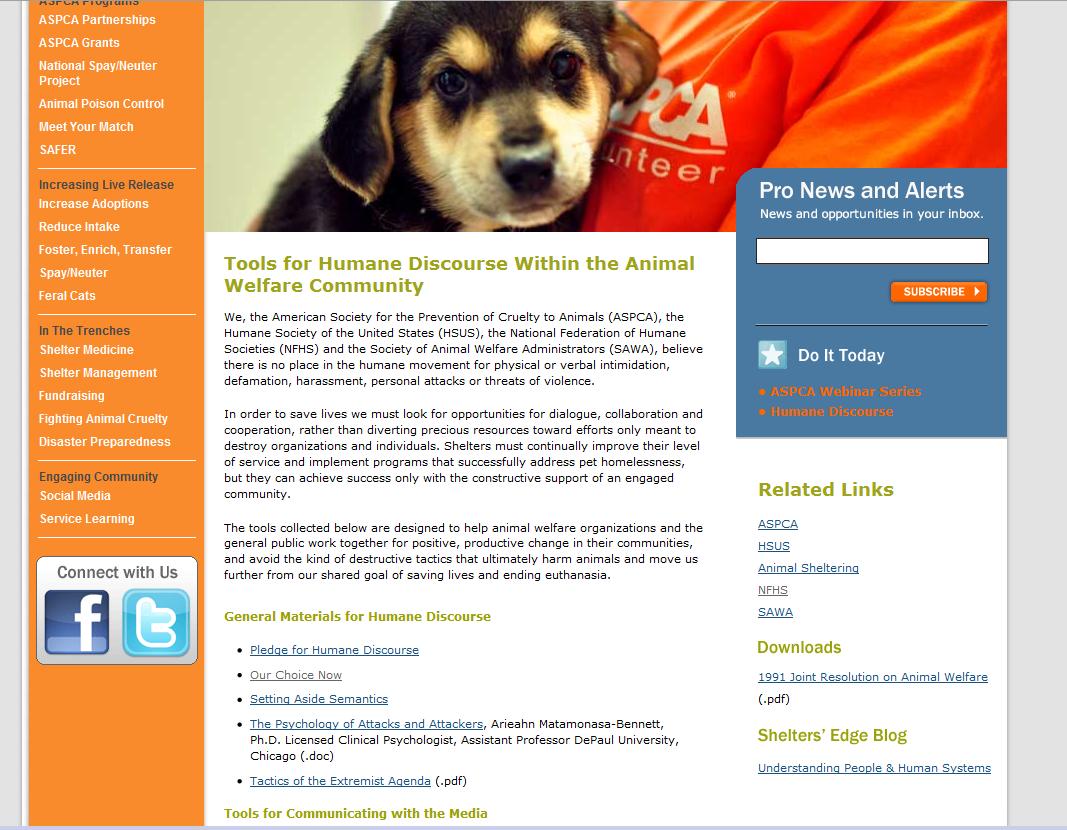
Screenshot of ASPCAPro webpage 11/8/11 AM

The ASPCAPro webpage as it appeared before certain extremely embarrassing documents were made to disappear. Click to enlarge.

Until Tompkins County became the first No Kill community in U.S. history, No Kill was said to be impossible. When other communities followed suit, it became probable. When we cross the tipping point, it will become inevitable. 

~Nathan Winograd, from “On Leadership


Yesterday morning, a friend emailed me a couple of links that she’d seen the ASPCA was promoting on Facebook and in email blasts.  Of particular note was a document entitled “The Tactics of the Extremist Agenda.”  I am so taken with it that I will quote it in its entirety, in addition to linking to a pdf.

Here it is:

The Tactics of the Extremist Agenda
Step 1: Establishing a Proxy

A member of a community will begin to adopt the talking points of the Extremist Agenda, using aggressive and divisive language to describe the state of that community’s animal welfare organizations.

Step 2: Creating a Local Organization

The proxy forms an organization (i.e. “No Kill Austin/Louisville/Houston/Philly) that will act as the local brand for the Extremist Agenda and begin to use social networking to expand.

Step 3: Engaging in Local Politics

The no-kill organization lobbies local public officials and candidates regarding the existing euthanasia rates at the municipal shelter. In most cases, there does exist public attention to the need to reform the sheltering system to increase lifesaving.

• The proxy organization will get involved in local elections, providing questionnaires and financial support to candidates perceived as sympathetic to the Extremist Agenda.

Step 4: Slandering Existing Animal Welfare

The Extremist Agenda slanders the existing shelter director and any local humane organization that is deemed to be sympathetic to the status quo. The aim of the slander is to put enough pressure on the director to step down (which is often achieved).

Step 5: Installing a Puppet Regime

A new “compassionate” director sympathetic to the Extremist Agenda is put in place through effective lobbying. The Extremist Agenda organization will often advocate a candidate with little or no experience who will essentially do as they are told.

Step 6: Saving Face when the Agenda Fails

The Extremist Agenda displaces blame when the program becomes unsustainable by blaming either their own director or local public officials for not backing them sufficiently.

Step 7: Slandering Media

Attacking unfavorable media is commonplace for the Extremist Agenda when a story runs that questions any component of implementing overnight solutions while demonizing hardworking animal welfare organizations.

I am nonplussed once again.  I didn’t think I could be, but I am.  I love the First Amendment.  It’s my favorite.  Why are they trying to make it seem so–dirty?  And, holy crap!  Somebody figured out how to channel Senator Joe McCarthy!

Are you a citizen concerned about abuse and killing at your local animal shelter (paid for with your tax dollars and/or donations)?  The ASPCA calls you a ‘proxy’.  Do you believe that shelters should implement the No Kill Equation, saving 90+% of all homeless pets in the community?  According to the ASPCA, you are a proponent of the dreaded “Extremist Agenda.”  Do you speak the truth about the abuse and killing at your local “shelter”?  Do you call out killing apologists?  According to the ASPCA, you are committing slander, being divisive, and demonizing.  According to the ASPCA, a compassionate shelter director committed to the No Kill Equation is a puppet and needs to be corralled within scare quotes.

According to the ASPCA, “In most cases, there does exist public attention to the need to reform the sheltering system to increase lifesaving.”  So, what’s the bigger problem to them—the fact that so-called shelters kill needlessly and spitefully (as when rescue is en route) and abuse animals in the process, or the fact that this reckless irresponsibility and malice is making its way into the public eye?

Plus, all of their name-calling combined with their admonitions against slander and divisiveness would be comical if they didn’t perpetuate tragedy after tragedy.

I noticed that the ASPCA name and logo were conspicuously absent from these documents.  Why would they leave that stuff off?  Deniability?  The document properties for “The Tactics of the Extremist Agenda” indicate that it was created on October 4, 2010, so apparently, it has been making the rounds behind the scenes for over a year prior to yesterday’s little indiscretion.  Another disappearing document, “Engaging Public Officials” was created on October 5, 2010.

Before the day was out, the ASPCA realized that it had done something extremely stupid and pulled two of the more incriminating documents from its website.   The link that led to “The Tactics of the Extremist Agenda,” now yields only  an error message.

All that is left of "The Tactics of the Extremist Agenda" and "Engaging Public Officials" on the ASPCAPro website.

All that is left of the Extremist Agenda" and "Engaging Public Officials" on the ASPCAPro website.

But the internet being what it is, once the proverbial lolcat is out of the bag, it’s on more hard drives than you can count and it ain’t going back in.

Mission Orange kitteh wants you to STFU

Mission Orange kitteh wants you to STFU

When I first saw these webpages, I had a feeling that they might not be long for this world, so I took the screenshot at the top of this post for posterity and downloaded “The Tactics of the Extremist Agenda” and “The Psychology of Attacks and Attackers”  (I got a particular charge out of their effort to create a perception of a ‘slippery slope’ whereby the presentation of legitimate concerns becomes a verbal ‘attack’ and segues into ‘violence’.  Smarmy, smarmy, smarmy.   Never mind that these people commit actual violence every time they kill an animal.)  I also downloaded “Engaging Public Officials.” I wasn’t the only Extremist No Kill advocate  who did.  John Sibley also preserved “The Tactics of the Extremist Agenda”  and “Engaging Public Officials” for your entertainment.  He’s an extremely civic-minded dude.

It’s worth having a look at the remaining links on the “Tools for Humane Discourse” page while they last.  Try not to get whiplash from all the irony.

Let’s Get It Done” contains the telling statement, “We stand to lose something even more valuable than votes – the public’s money and time.”  I thought I’d highlight that statement because it is one of the only ones in the whole lot that is both honest and truthful.  I’m extremely helpful that way.

If your sense of humor is sufficiently warped, you might enjoy the “Pledge for Humane Discourse” almost as much as I did.  Upon scanning the list of signatories who pledged:

We the undersigned individuals and organizations, in conjunction with the Humane Society of the United States (HSUS), reject and condemn verbal abuse, threats, and acts of violence directed against animal welfare personnel. There is no place in the humane movement for physical or verbal intimidation, violence, or acts of terrorism.

Such behavior is wholly inconsistent with a core ethic of promoting compassion and respect, and undermines the credibility of the entire animal welfare movement. Our goal must be to affirm the value and integrity of all life, whether animal or human, and to encourage others to do likewise. Verbal attacks, threats, harassment, defamation, and acts of violence, moreover, do not ultimately help animals. Instead, they eliminate opportunities for dialogue, collaboration and cooperation, making our shared goals, including that of ending the euthanasia of healthy, adoptable animals, harder to achieve. A free and respectful exchange of views in the ongoing national conversation about animal welfare practices, including animal sheltering practices, is the standard to which humane organizations and communities should aspire and adhere.

We call on every animal welfare group and advocate to join us in actively promoting compassion and respect not just for animals but for those people who work tirelessly on their behalf. Please pledge your commitment by adding your name below.

A few names jumped out at me—

Killing apologists find plenty of room “in the humane movement for physical or verbal intimidation, violence, or acts of terrorism” when they are the ones doing the intimidating, which is one reason why we have National Animal Shelter Reform Week.  I’d like to thank the ASPCA for inadvertently adding to this week’s revelry.

Proponents of the Extremist Agenda  Animal-lovers and No Kill advocates should, most of all, view this episode as a sign that we have gained enough ground that killing apologists  (even those with literally over $100 million at their disposal) regard the current situation as a crisis and are starting to (pardon the non-vegan metaphor) run around like a bunch of chickens with their heads chopped off.  A crisis is, by definition, a dynamic situation—danger mixed with opportunity.  (They’re in danger of being exposed for what they are—people and organizations who value money and power over the lives of animals; and we have the opportunity to make “shelters” into real shelters.   They have the opportunity to change and get on board with the Extremist Agenda lifesaving; and we are in danger of being labeled “extremists” and subjected to various and sundry other nastiness.)  It is heady, exciting, exhausting and the time when real leaders emerge.  It means we are at, or very near, the tipping point.

The old ‘catch and kill’ monolith is showing its cracks.   It’s up to us to replace it with a new, extremely life-affirming paradigm.

“I don’t think these documents make our job harder; I think they make our job easier,” said Ryan Clinton of Fix Austin, one of the groups the disappearing ASPCA documents referred to specifically as ‘extremist’.    “Any time you get a hold of the other side’s ‘talking points,’ it destroys their credibility with public officials and media.  I particularly love the line that says “Public officials who are leaning in the Extremist direction need to be handled cautiously.””

I am extremely grateful for that.


Nov 5 2011

Posts of Note: As thinking changes, so does the world

Valerie Hayes
Owney the postal dog.

Owney was a USPS mascot in the late 19th century.

The Southeast Pet Rescue Railroad has this handy guide to making effective use of twitter for animal rescuers and advocates.  Learn how to use twitter to get the word out about adoptions, events, fundraisers, advocacy campaigns and more.  There’s more on social media in general in this older post by Mike Fry.  Getting the word out with social media increases the pace of change exponentially.

A biological anthropologist writes about grief in animals for NPR.  That animals such as cats can experience grief is not news to animal lovers, but for a scientist to write about it in the media is a sign of changing times.  And the more you think about it, the more tragic our broken “sheltering” system looks.

Not exactly breaking news, but the US Post Office has issued commemorative stamps of Owney the postal dog.  The story of Owney illustrates how attitudes towards dogs have and have not changed over the past 100+ years.

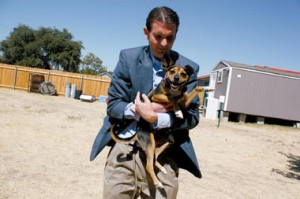
The Christian Science Monitor profiled Ryan Clinton in its People Making a Difference feature.  This terrific piece is further evidence that the No Kill movement is arriving at its tipping point.  There’s a lot to love about this article.  I particularly liked how Dr. Ellen Jefferson talked about how participating in the No Kill movement changed her thinking about how to prevent shelter deaths.  In a short piece the article manages to show what happens when you act on a simple principle:

“Everyone needs an advocate,” he says of his animal welfare work, in a modest and lawyerly way. “And this was a solvable problem.”

This post from the New York Times makes me think of how the plight of shelter animals has long been an orphaned issue, an embarrassment to be defensive about, in animal welfare.  I’d like to juxtapose it with this classic by Ed Duvin.  Are elements of the attitudes described in the Times article part of why groups like PeTA are anti-pet (or part of their internal self-justification process)?

And there’s this exciting news from Florida.

And a court ruling in Texas allows for ‘sentimental damages’ in the case of a dog wrongfully killed by a “shelter”.

Classic Posts

Not new, but worth reading (or re-reading):

“The Butterfly Effect” is a wonderful story of an amazing encounter between a Washington Post reporter and a Red Admiral.  There is more to the universe than we know.


Ryan Clinton holds a rescued dog, photo from the Christian Science Monitor.

All pets would grin like this if they lived in No Kill communities. Photo from the Christian Science Monitor.


UPDATE:  It turns out that Owney, despite  being dead for over 100 years, has a very active twitter feed.

This is the first in a weekly series in which I will highlight blog posts, articles and such in keeping with the theme of this blog.


Oct 17 2011

Pennsylvania, gassing homeless pets since 1872

Valerie Hayes
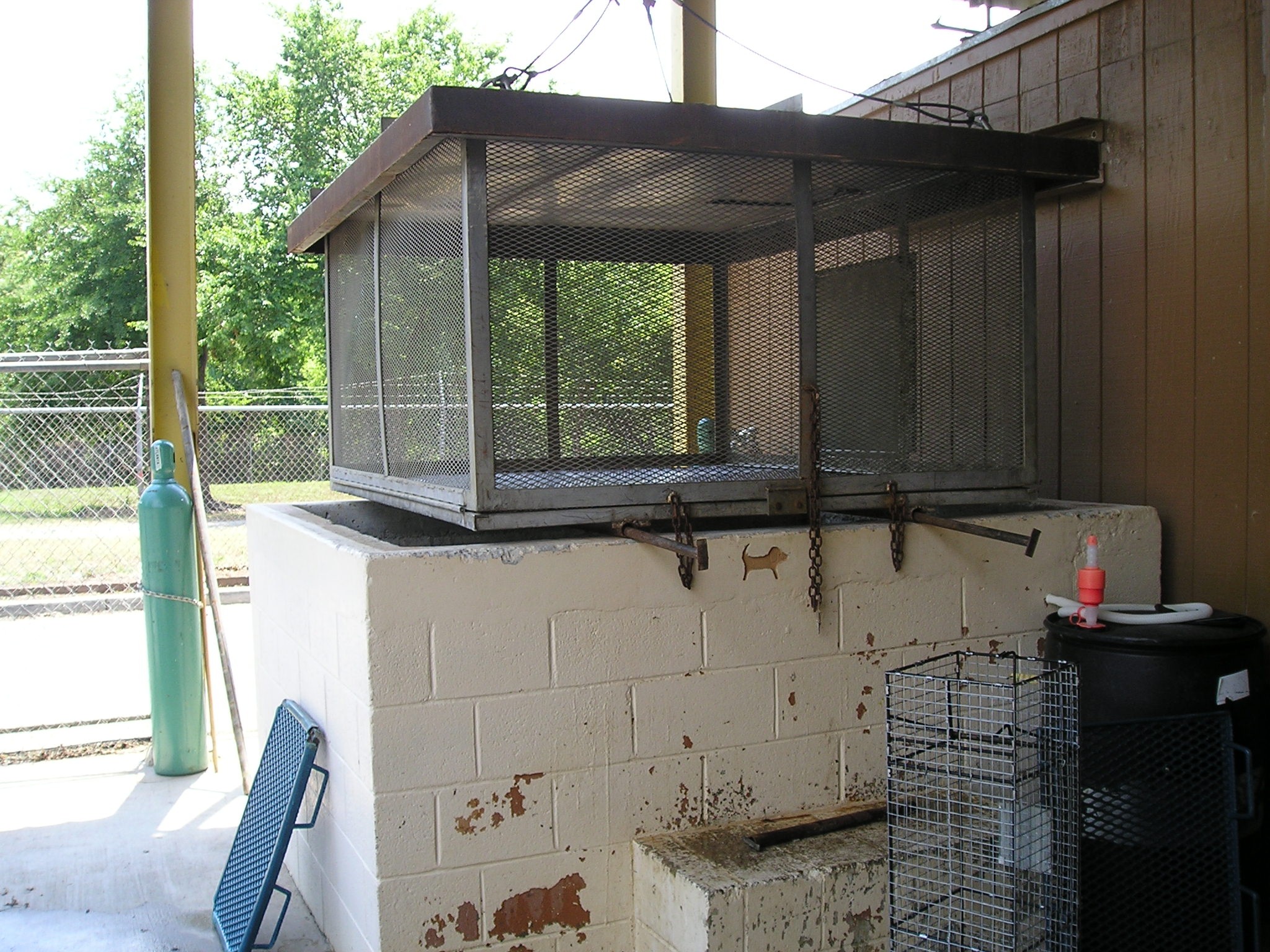
The now-defunct Macon, GA gas chamber.

Since writing about gas chambers in Pennsylvania last week, I had a nagging thought at the back of my mind that there was a particular connection between the use of gas chambers to kill shelter pets and the state of Pennsylvania, something that went beyond their simply continuing to use this cruel and outmoded method of killing.  What was it?

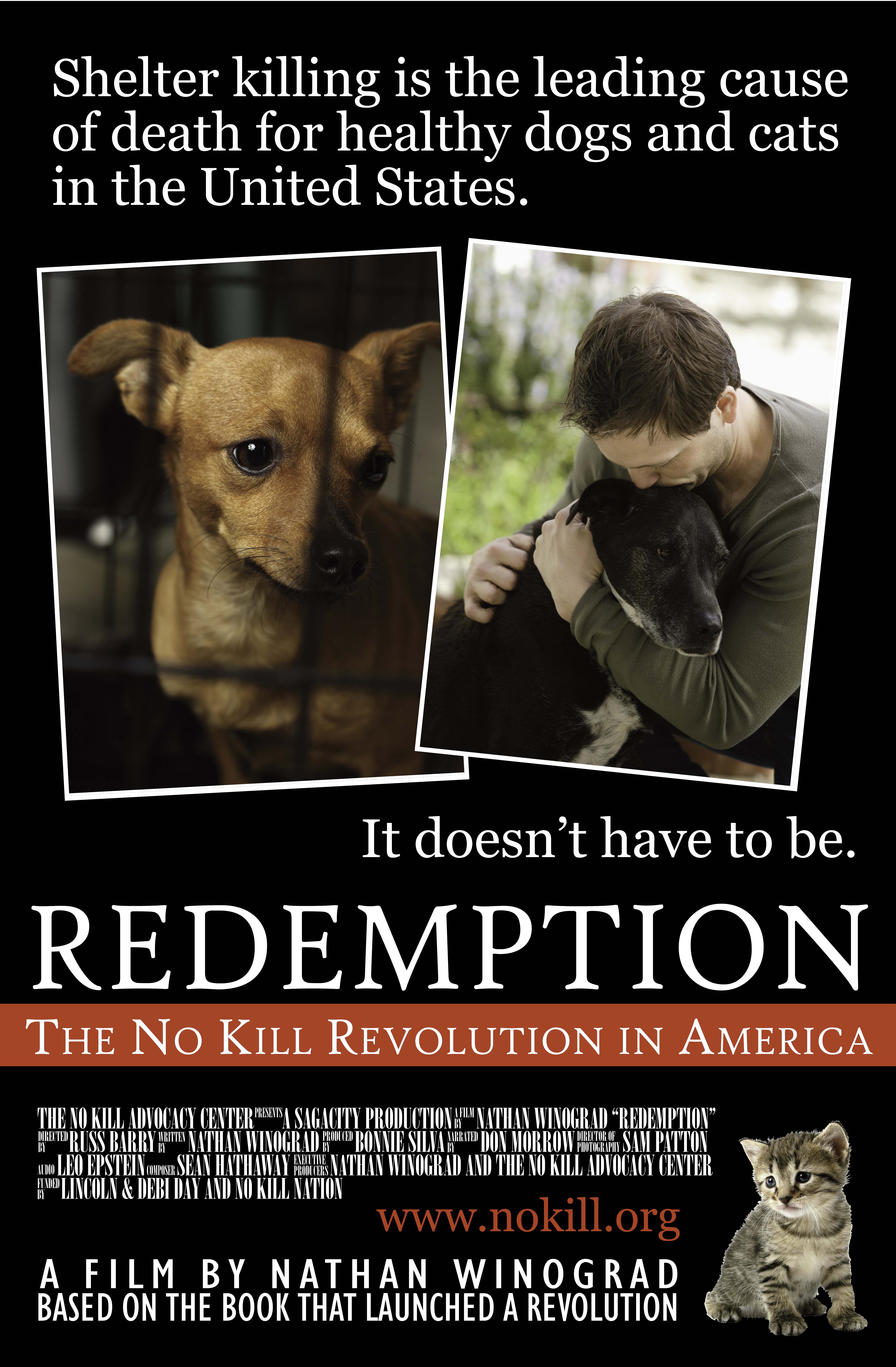
I grabbed my dog-earerd copy of Redemption off the shelf and consulted the index, which led me to this:

While by far the largest, the ASPCA was not the first SPCA to make the transition from prosecuting animal cruelty to running the dog pound.  In 1872, in an effort to reduce the public exhibition of cruelty favored at the time by Philadelphians in ridding the city of stray dogs, the Women’s Pennsylvania SPCA* accepted the first pound contract in the United States by a private humane society and established a three-pronged approach to stray animals.  First, it began a humane education program promoting lifetime commitments and the importance of keeping animals in the home.  Second, it offered homeless animals for adoption. Third, it  introduced the use of the gas chamber to replace old, slow and more painful practices of killing stray animals, primarily in the form of drowning, beating and shooting. [emphasis added]

So, we are living with, and animals are suffering and dying in the gas chamber because an organization took the more ‘ladylike’ route of taking up and promoting ‘kinder’ killing rather than sticking to principles, and the state of Pennsylvania has the longest history of gassing shelter pets.  It’s time to finally do something unladylike and ban the gas chamber in the state that gave it its start.

It is worth noting that while “shelters” have killed homeless pets in the gas chamber for 140 years, the excuses killing apologists give for doing so have changed.  In 1872 it was because it wasn’t as bad as drowning, beating and shooting.  In 2011, the excuse that it is humane looks utterly ridiculous to normal people, and apologists are relying more on false economic arguments to preserve the status quo.

The more things change, the more they stay the same.

Time marches on.

We know that the gas chamber is far from humane, that it is itself old, slow and painful.  A handful of “shelters” in Pennsylvania continue to use this cruel method of killing, hiding the shameful practice from taxpayers and donors.  It seems highly unlikely that they will stop doing so until they are forced to by the passage of  PA S.B. 969.

Pennsylvania residents should call or write their Representatives and Senators in support of S.B. 969.  Politely let them know that you want them to do the right thing and move the bill along as is and vote to end the use of the gas chamber in your state, and that their vote will influence yours.

One obstacle to banning gassing in PA is the Pennsylvania Veterinary Medical Association.  They are actively blocking the bill.  Why?  Apparently because they can.  Some have cited economics as the reason, but that begs the questions of how is the PAVMA benefiting financially from the continued use of a handful of gas chambers, and is this ‘benefit’ really greater than the cost to the PAVMA’s reputation.  Other organizations, notably the Association of Shelter Veterinarians, recognize the cruelty inherent in gas chambers and have stated unequivocally that they have no place in animal shelters.

You can (politely) ask the PAVMA why they are supporting continued cruelty to shelter pets and placing their own organization’s reputation in self-destruct mode here:

Pennsylvania Veterinary Medical Association
8574 Paxton Street
Hummelstown, PA 17036
717.220.1437
http://www.pavma.org

Charlene Wandzilak
Executive Director
cwandzilak@pavma.org

They can still turn things around.  I’m willing to bet that most veterinarians in Pennsylvania are not happy about what the PAVMA is doing in and to their names.  If and when I get a response, I’ll publish it, and I’d like to see any responses you get as well, so feel free to post them in the comments below.

The gas chamber may have seemed expedient almost 140 years ago, but ‘expedient’ and ‘right’ are two completely different things.  We are still having to contend with the cruel legacy of that expediency.  Let’s set things right.

Ban the gas chamber in the state where it has been used the longest.

*The Women’s Pennsylvania SPCA is now known as the Women’s Humane Society.  Their ‘about’ page indicates how 140 years has produced little fundamental change in their organization’s mindset:

The Women’s Humane Society is a non-profit organization serving the Delaware Valley area.  We are located in lower Bucks County.  Our Bensalem facility is our only location and place to visit our adoptable animals.  We receive no government funding, relying instead on donations and fees that reflect our animal welfare mission.  We shelter unwanted dogs, cats, domestic rodents, birds, and the occasional ferret.  In addition to our adoption services, we offer a walk in vet clinic for routine care, cruelty investigations, an animal ambulance service for the pick up of animals being surrendered to our facility, obedience training classes and humane education programs.  Volunteers assist us in working with the public and in clerical roles.  Most of our adopted animals are spayed or neutered at our on-site veterinary hospital, which is also open to the public.

The Women’s Humane Society is an open admissions or unlimited access shelter.  We do request that people live within 50 miles of our facility as we are confident that there are other facilities with similar practices, policies, and successes between us and someone living 50 miles from our location.  If you have several adult cats to trap on your property, we request that you limit your use of the humane trap to two surrenders a week in an effort to avoid the euthanasia of adoptable cats when cages and rescue spots fill during kitten season.  We will euthanize when space becomes an issue.  We have not had to euthanize dogs because of space issues since 1999, when the internet became a popular tool in pet adoption.  There continue to be many more cats and kittens that will need homes than there are shelter, rescue, foster care space and adopters during the busy kitten season of summer and early fall.

We are a humane shelter, meaning we will end suffering or the high risk of suffering in the future for that animal or others at the shelter, in an adopter’s home, or their community.  While we respect the work of our limited access or no kill counterparts in the animal rescue and adoption field, we stand by our position to turn no one away and keep adoption affordable.  You may learn more about how we determine suffering and risks by reading the section on ‘Giving Up an Animal’ and the two adoption pages on the menu to the left.  We invite you to sign our guest book and review the many topics covered on this site.


Oct 16 2011

Today is National Feral Cat Day

Valerie Hayes
Scaredy Cat, a feral cat neutered and ear-tipped by Project Cat Snip.

Scaredy Cat, a feral cat neutered and ear-tipped by Project Cat Snip. When the building near where he lived in Atlanta was demolished, `Project Cat Snip relocated him to a farm outside of Atlanta.

Today is Alley Cat Allies’s 10th annual National Feral Cat Day.

Trap-Neuter-Return (TNR), advocated by ACA is the most humane way of managing feral cat populations–everybody wins with TNR.  The cats are healthier; they are vaccinated against diseases like rabies at the time of neutering, which makes things safer for everyone in the area; the cat population shrinks, which is good for wildlife, TNR keeps feral cats out of ‘shelters’ where they would otherwise be killed and is an essential part of the No Kill Equation.

In the Atlanta Metro area, contact Lifeline Animal Project (they have two clinic locations and their Catlanta program is specifically for feral cats) or Project CatSnip (which is cats-only and has a mobile clinic) for spay-neuter services for your local feral cats, or to donate to their lifesaving work.  Both organizations also offer affordable spay-neuter services and vaccines for pet cats.  nationwide, contact Alley Cat Allies for more information about TNR.

How are you celebrating?


Oct 15 2011

Fall is coming on Red Top Mountain State Park, GA

Valerie Hayes
Looking Into Fall--Red Top Mountain State Park

Looking Into Fall--Red Top Mountain State Park