Jan 13 2012

Just One Day: Every journey begins with a single step

Valerie Hayes
Just One Day

June 11, 2012, a national day of hope for homeless pets.

June 11, 2012 is a day to remember and to celebrate life in a very practical way.  On that day, animal shelters and rescue groups across the nation will observe a day of not killing any healthy or treatable homeless pets. 

Just One Day is a chance to make a lifesaving difference for over 10,000 animals nationwide. 

A day is 24 hours. A day is how we measure how much time we spend at work. A day can be something we look forward to, a celebration of some kind. But in U.S. animal shelters, a day represents 10,411 lives needlessly lost.

To most people, June 11 is Just One Day. But, June 11 is a day that could change everything for 10,411 companion animals, and a day that can change the world. On June 11, 2012, we could be a No Kill nation.

Georgia has over 400 shelters and rescue groups listed on Petfinder.  According to a report issued by the Georgia Voters for Animal Welfare, an estimated 260,000 shelter pets are killed annually in the state.  Given that June 11 is during the height of kitten season, when shelter intake and killing are higher than at other times of the year, full, statewide participation in Just One Day would mean the difference between life and death for approximately 1,000 animals.  As of this writing, only two Georgia shelters or rescues have taken the pledgeAnimal Ark Rescue and Green Pets America.  If all 400 or so signed on and each did just three more adoptions than usual on that day, it would exceed the goal for Just One Day in Georgia. 

Traditional and animal control shelters can pledge to grant their healthy and treatable homeless pets a reprieve for Just one Day (or longer).  No-kill shelters and rescues can pledge to assist traditional shelters for just One Day (or longer) above and beyond what they already do.  Organizations making the pledge receive a free package of materials including sample press releases and adoption promotions to help make June 11 and beyond a success for everyone.

So, if you run a shelter or rescue, take the pledge.

Ask your local shelter or rescue to participate.  Ask your friends to do the same.  Adopt a pet from a shelter or rescue.  Volunteer or donate to help make Just One Day anything but just another day.   Support participating organizations.  Spread the word through letters to the editor and social media.  Ask your elected officials to support Just One Day. Yesbiscuit! has some great sample letters and ideas you can adapt for your own use.  Everyone can do something.

Let me know in the comments what you are doing for June 11 so that I can spread the word.  Please also let me know of  any shelters that refuse to participate and why so that we can help them see the error of their ways. 

June 11 is a day near and dear to my heart.  June 11, 2001 was the day that a beleaguered bunch of volunteers at a shelter in upstate New York got what we’d been fighting for, got more than we dared to hope for–an abrupt end to the killing of healthy and treatable pets and the creation of the first No Kill community in the nation.  Let the success of  Tompkins and many others be your success, even if it is for Just One Day.

“What saves a man is to take a step.  Then another step.  It is always the same step, but you have to take it.”  ~Antoine de Saint-Exupery, quoting his friend Guillaumet in Wind, Sand and Stars


Dec 20 2011

So near, yet so far apart

Valerie Hayes
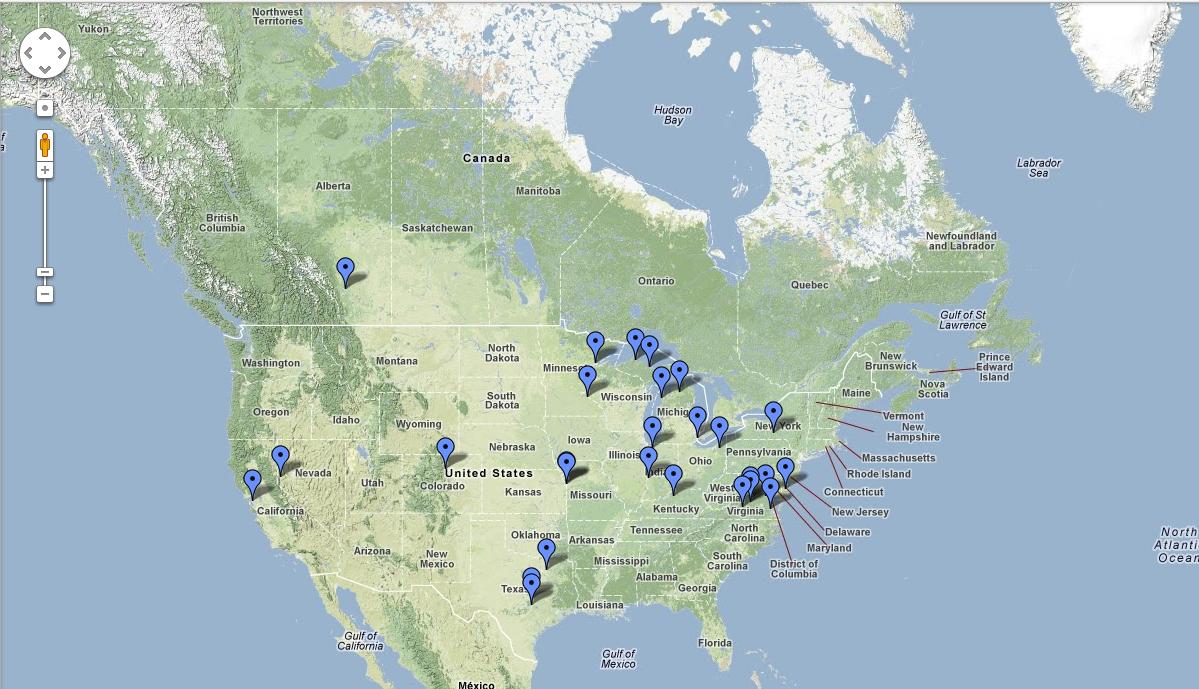
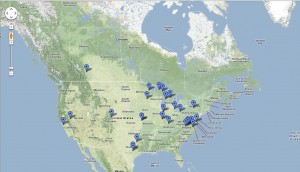
No Kill Communities in North America as of 12-19-11

A map showing the locations of communities saving at least 90% of the homeless pets entering their shelters. Click to enlarge.

Remember the wonderful positive energy and message expressed in the “Take a Chance on Me” video form the SPCA of Wake County a while back? Although it has since been pulled due to objections from the record company, it showed that an animal shelter could be a place of joy if it was committed to lifesaving. By contrast, a ‘shelter’ that squanders the lives of animals squanders the hearts and goodwill of volunteers. It’s either win-win or lose-lose. Two shelters in the same county, worlds apart.

Back in August, Mike Fry of Animal Ark in Minnesota wrote an article entitled “A Tale of Four Cities” that began:

Geographically, they are widely distributed. Demographically, they have little in common. Yet this strange collection of communities have something very much in common: The old-school “catch and kill” style animal shelters in them are experiencing tremendous upheaval, brought about by a growing and passionate group of no kill advocates.

Perhaps more important is the fact that the dramatic shifts currently underway in Miami-Dade County, Florida; Harris County (Houston), Texas and the twin cities of Minneapolis and Saint Paul, Minnesota come on the heels of seismic shifts that have occurred in other communities, like Austin, Texas; Washoe County (Reno), Nevada and others. Collectively, the tales unfolding in these communities prove that the no kill movement is continuing to gain in strength and momentum, and could likely bring about the most important shift within the animal welfare movement ever.

Four “shelters,” far apart, yet with much in common.

Almost ten years ago, when it finally began to sink in that we were really saving all the healthy and treatable pets in Tompkins County, really, actually doing it, I began to think that the logical next thing would be that Tompkins would send ripples locally, that adjacent counties would see what we were accomplishing and would do it too, and that pebble tossed in the water, that Big Bang,  would send out ever-widening circles, extending compassion and continued life to homeless pets as it went.  I was wrong, and there is still only one No Kill community in the state of New York.*

It seemed to make logical sense, so why didn’t it happen?   Why didn’t the spread of No Kill communities follow Waldo Tobler’s First Law of Geography?

Everything is related to everything else, but near things are more related than distant things.

I’ve been wondering about this for a while.  Early in the movement, the No Kill philosophy didn’t travel to nearby communities so much as it leapfrogged across great distances.  It spread, not by diffusion, but by jump dispersal, to put it in the terms of biogeography.  Like windblown seeds, like birds caught in a storm, this extraordinary idea—that we could save them all, that we could leave killing in the dark and distant past—floated hundreds or even thousands of miles, to be taken up by one extraordinary person after another who would work for it, who would fight for it.  It’s a tough little idea with the ability to fly.  It has to be to survive the onslaught it still faces wherever it goes.  Like life itself, it is not easy, but full of inspiration.

It is people, not proximity.  People who are at once ordinary and extraordinary.

No Kill is an idea, and thanks to the internet, ideas can leap across continents in an instant.  More and more people are ‘getting it’.  It is as simple as the Golden Rule–even young children can understand it, yet the current killing paradigm is ensconced in such a morass of excuses, lies and obfuscations that it persists, at least for now.  No Kill communities aren’t correlated with economics—why are wealthy communities not already No Kill whereas less well-to-do ones are? It takes a decision and hard work, often in the form of a fight.

Every No Kill community was once a killing one.  Every single one looked impossible until it was done.  They didn’t “try” for years, they made a decision, and they carried it out immediately.

The No Kill movement has recently begun getting some of the national-level, mainstream press coverage that it deserves, and I expect we’ll see more and more of it in 2012 as we continue to gain traction.  That little document-leaking episode last month was the sputtering of a faltering regime.  I just hope that they read the writing on the wall–that Extremist Agenda graffiti that says we can save 90+% of all animals entering open-admission municipal animal control facilities—and get with the program sooner, rather than later.

Last week, Forbes magazine gave it this mention:

Most people assume that the ASPCA, one of the largest and most well-funded animal-rights groups in the world, who profess to prevent cruelty to animals, would be all for advocating that homeless cats and dogs not be killed at animal shelters. Not so. A big eye opener: The ASPCA has actively fought to prevent cities from establishing no-kill shelters and aggressively fights bills proposed in local city councils that aim to reduce the number of innocent animals being killed. Another shocker? PETA, does too. The true protectors of animals are not the bureaucracy-rich animal rights organizations, but smaller groups and individuals. Nathan Winograd, author of Redemption, and Stanford-law-educated ex-criminal prosecutor and corporate attorney, is the founder of a growing no-kill-shelter movement—and gets my vote for most important intellectual this year. His no-kill actions challenge the status quo by thinking beyond the box. He’s developed a creative and realistic plan that many cities are successfully using to save most of their homeless animals. New York City’s ACC, who murders hundreds of cats and dogs each week needs to reform and implement his ideas.

And, presumably, the checkbooks of a wealthy animal-lover or two accustomed to donating to the ASPCA or PETA, were slammed shut.   Money talks.

A couple of months ago, the Christian Science Monitor profiled Ryan Clinton and the work of Fix Austin and Austin Pets Alive! in making Austin the nation’s largest No Kill community.  It mentioned how they recently formed American Pets Alive! to support grassroots No Kill efforts elsewhere and quoted Clinton, “I really think we are at the tipping point nationally and this is going to happen all over the country very quickly.”

We’ve gone from exactly one No Kill community ten years ago to over 25 now, with several communities poised to join the “90% Club” and many more reform efforts underway.  Still, that amounts to less than 1% of the estimated 3500 animal shelters in the country.  It may not seem like much, but the number is increasing at an increasing rate–most of these were announced within the past year or so.  No Kill Houston and the No Kill Communities blog have been keeping lists of these communities as they pop up, but a visual representation helps to put things in a spatial context.  Cathy Habas of No Kill Louisville put No Kill communities on the map –literally, a Google Map, and that gives us another way of looking at where we are and where we’re going.    There’s a lot of blank space in the Southwest, Southeast, New England, Alaska and the Hawaiian Islands, but there’s a nice cluster developing in and around Virginia and some interesting things happening in Texas.   How impossible can it be if it is all over the map?

If we’re at the tipping point, and it looks like we may well be, then this map and the landscape of animal sheltering in this country will be looking very different very soon, but this isn’t a passive process–it doesn’t just happen by diffusion.  Not yet, and maybe not ever.  It happens by jump dispersal.

A determined leap.

A decision.

A marker is something to celebrate.  A blank space is an opportunity.


*New York City has been “trying” to go No Kill for years, missing deadline after deadline.  If the ASPCA were to throw its considerable heft behind making New York City No Kill and ending the rampant abuses at NYCACC, rather than blocking No Kill efforts there and elsewhere, the Big Apple would be the biggest No Kill community in the country tomorrow.


UPDATE  12/20/11 From Cathy Habas:  “The “Map of No Kill” just got more impressive. Because it was shared extensively yesterday (600 views in a day! Wow!) I’ve gotten some feedback regarding even more No Kill communities! Seagoville, TX; Brown County, IN; Chippewa County, MI; Allegany County, MD; Ivins, UT; and Vancouver, BC all joined the map.”

UPDATE 12/21/11 Healdsburg, CA joins the map with a 93% save rate in 2010 and a 95% save rate in 2011, bringing the current number of No Kill communities in North America to 34!  Still think it’s impossible?

Click here to see the updated map.

Nov 21 2011

Posts of note: commonplace things usually unseen

Valerie Hayes
Dog shaking dry

Dog shaking dry. Carli Davidson Photography.

One thing that I find very striking/puzzling about the whole “but, but, but…they do so much good” argument is how it only seems to apply to animal “protection” groups.  I have yet to see anyone dare to defend Sandusky by saying that he “did so much good” with his youth group, so lets all look the other way about his being a child molester.  I don’t recall anyone defending the Catholic church along similar lines.  Both have been universally condemned, and deservedly so.  And, although I can’t think of an instance where this has happened, if an environmental group wiped out an endangered species or engaged in toxic dumping, I doubt we’d hear about how much other good they did.  Why do people, and those who like to be seen as animal lovers, no less, defend animal organizations in this way?  It is bizarre.

The perspective of abuse survivors is generally hidden and overlooked.  Whether or not any form of justice is served, the aftermath of abuse lasts and lasts.

Abuse itself is generally hidden, and often in plain sight.  An interesting article in the New York Times looks at the social dimensions of ethical and unethical behavior.

Professor Zimbardo has classified evil activity in three categories: individual (a few bad apples), situational (a bad barrel of apples) or systemic (bad barrel makers).

I’d describe the broken animal “sheltering” system we have today as a classic example of the latter category, and large national groups such as HSUS and the ASPCA as the “bad barrel makers.”  The article concludes:

“The majority of people can get seduced across the line of good and evil in a very short period of time by a variety of circumstances that they’re usually not aware of — coercion, anonymity, dehumanization,” he said. “We don’t want to accept the notion because it attacks our concept of the dignity of human nature.”

While it may be easy to give up in the face of such discouraging findings, the point, Professor Zimbardo and others say, is to make people conscious of what is known about how and why people are so willing to behave badly — and then use that information to create an environment for good.

…Although no one thinks it’s an easy task, Professor Zimbardo is not alone in his faith that people can be taught, and even induced, to do the right thing.

“I am a true believer that we can create environments to act ethically,” Professor Gino said. “It just might take a heavier hand.”


I’d never looked at a dog in quite this way.

And photography revealed these fascinating and comical views of animals doing something they do every day–shake themselves dry.  Sometimes you can’t really see what’s right in front of you.

No Kill News

The ASPCA debacles continue and include shipping dogs from one kill “shelter” to another, apparently for the publicity.  Scratch the surface…

In case you still think that “shelters” are full of hardworking people who love animals and hate killing them, there’s Memphis, TN and  McCracken County, KY for you to attempt to explain away.


Nov 13 2011

The ASPCA: Too big to care?

Valerie Hayes
ASPCAPro logo

Whose voice are they?

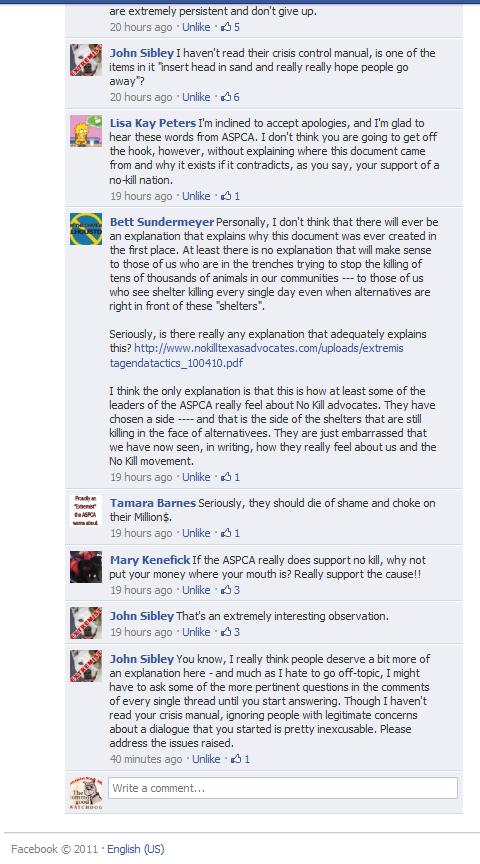
Two years ago, the ASPCA killed Oreo, the abused ‘miracle dog’ whose survival story had inspired so many people to get out their checkbooks and send in donations.  Last week, they gave us a glimpse of what they do for an encore by posting some rather incriminating documents in the worst hiding place ever invented.

Two documents in particular precipitated responses from Extremists here, there, and everywhere.   In case you missed it, “The Tactics of the Extremist Agenda” and “Engaging Public Officials” appeared briefly on the ASPCAPro website, the mission of which is:

To provide tools and resources for animal welfare professionals.

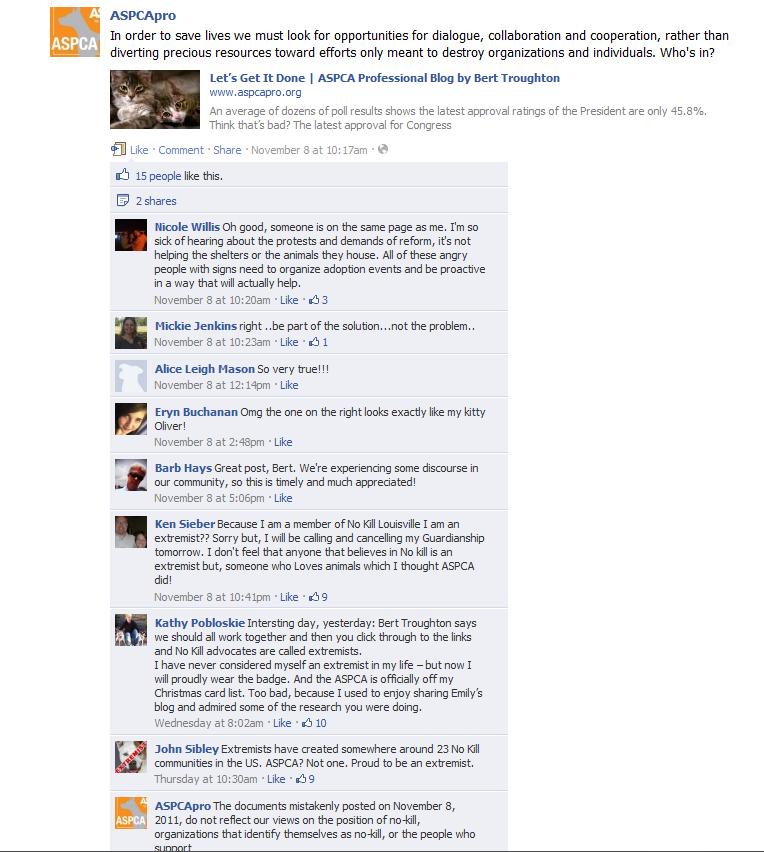
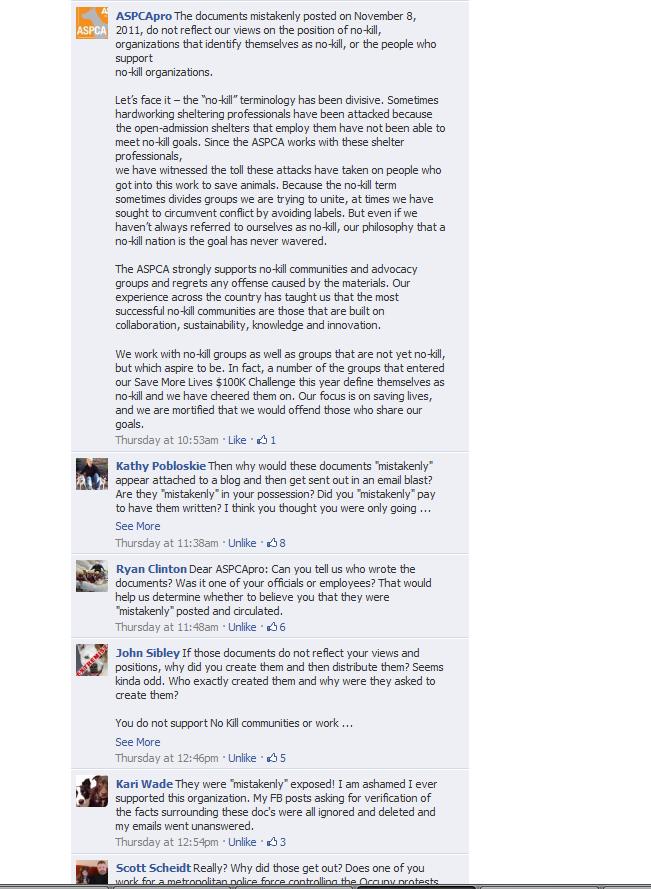
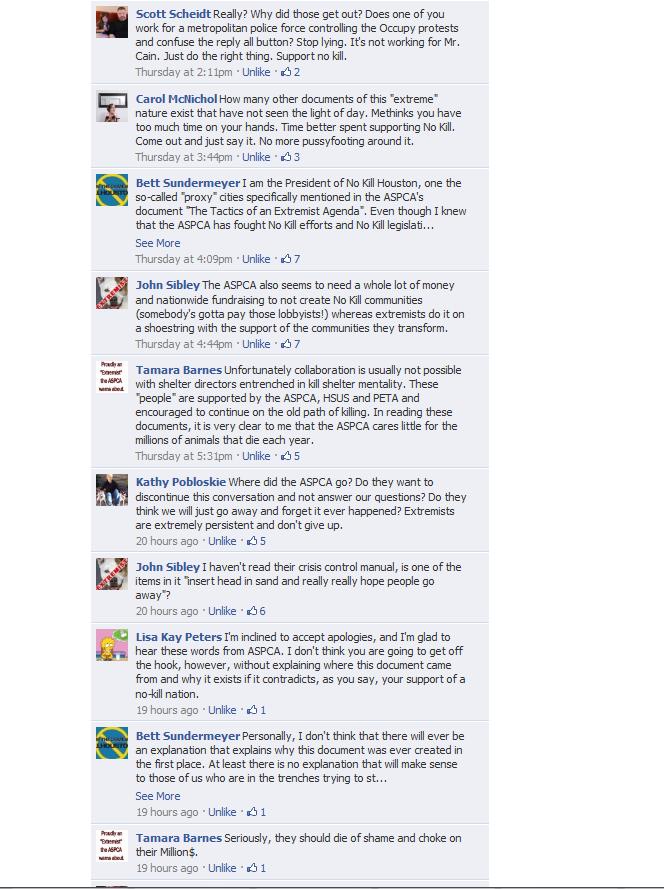
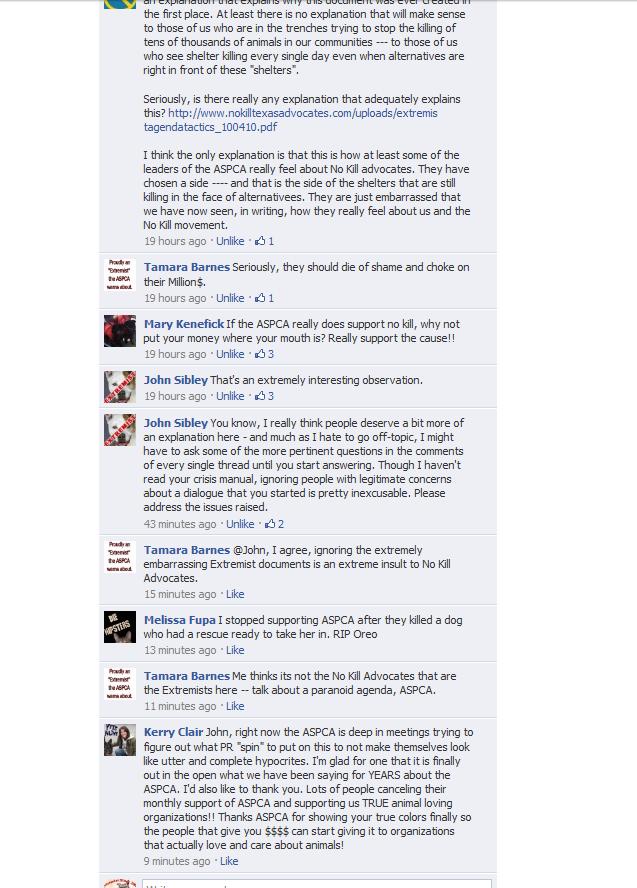
Once again caught with their pants down, they have proceeded to ignore some very fundamental issues.  There has been no apology, no press release, only a lame reply on Facebook.  In the interests of burying this issue and in appearing to respond while not substantively responding, the ASPCA did not issue the reply as its own free-standing post, much less a press release, but relegated it to a comment on another post, hiding it from most potential donors.  Pertinent questions from advocates remain unanswered.

I guess there is such a thing as bad publicity.

ASPCAPro Crisis Response 1

What passes for an official response, part 1. Click to enlarge.

ASPCAPro Crisis Response 2

What passes for an official response, part 2. Click to enlarge.


ASPCAPro Crisis Response 3

What passes for an official response, part 3. Click to enlarge.


ASPCAPro Crisis Response 4

What passes for an official response, part 4. Click to enlarge.


ASPCAPro Crisis Response 5

What passes for an official response, part 5. Click to enlarge.


‘Round and ‘round it goes…

I used to live near the ASPCA’s home turf of New York City, and I’ve known the ugly reality hidden behind the cute calendars for many years—since the early-mid 1980s, to be more precise, when I first heard the parable of the accountant and the veterinarian*, which I recounted in a previous article about the ASPCA’s opposition to Oreo’s Law.

The ASPCA has long been a nice comfortable killing machine.  It’s really quite amazing how times have changed and not changed…

An accountant was visiting his client, a veterinarian who worked for the ASPCA in addition to his private practice. In fact, he seemed to spend a lot more hours at the ASPCA than he devoted to his private practice, even though they weren’t paying him all that much. The accountant was at the vet’s office wrestling the books into some semblance of order and a very friendly dog with a badly scarred and misshapen head came galumphing over to be petted, and the accountant obliged him. The dog was friendly to the point of making a pest of himself by attempting to be an oversized lap dog. The accountant shooed him away so that he could get some work done. He could hear the clop-clop of the dog’s paws on the floor as he went down the hall, around a corner, and back up another hall to reappear at the opposite door of the office he was working in, with a look on his scarred face that said “Hi, I’m a different dog than the one that was just here a minute ago, pet me too”.

The dog had come to reside temporarily at the vet’s office as a result of the vet’s work for the ASPCA. He’d come in as a badly injured stray. Someone had apparently beaten him and he had multiple fractures to his skull, which the vet, who is well-respected for his considerable skills as a surgeon, had spent hours in surgery wiring back together. He practically donated some very fancy surgery to them because that’s the kind of person he is. They wanted to kill the dog after all that–”a friendly dog who wouldn’t win any beauty contests”, as the accountant described him. The vet removed the dog from their custody instead. The accountant told the vet that while he admired the work he did on behalf of this dog and other animals at the ASPCA, it was his responsibility as accountant to advise him to leave the ASPCA and concentrate on his private practice, and frankly, he couldn’t understand why he took that kind of abuse from them, and for so little money. The vet’s reply was impossible to argue with: 

“The animals need me.”

One protector in the killing machine was better than nothing at all. I can’t imagine how he did it for as long as he did. The tradition of killing animals for being there and abusing those who would do otherwise is a long one there. I am perpetually amazed at people who see it as a benevolent place. Apparently their marketing has done its job, but it would take a lot more than some nice packaging to remove the image of that dog my father described so vividly and what the ASPCA wanted to do to him, and to the vet.

I hadn’t thought of that dog in years, but recent events have made him restless. He’s been making his circuit down the hall, around the corner, and up the other hall, to reappear at the opposite door. Always the same question:

“Will it be different this time?”

When will it ever be different?

How long can a stagnant and retrograde organization maintain a positive public image (and a steady stream of donations) held together by cognitive dissonance and an aggressive ad campaign, in the face of rapidly changing times?


The last picture of Oreo.

The last picture of Oreo.

*Shortly after the events described therein took place.  At that time, the ASPCA held the animal control contracts for New York City.  The contracts have been held by the NYCACC since its creation in 1995 by then-Mayor Rudy Giuliani.


Nov 12 2011

Posts of Note: Nature, art and the side of human nature we often don’t like to acknowledge

Valerie Hayes
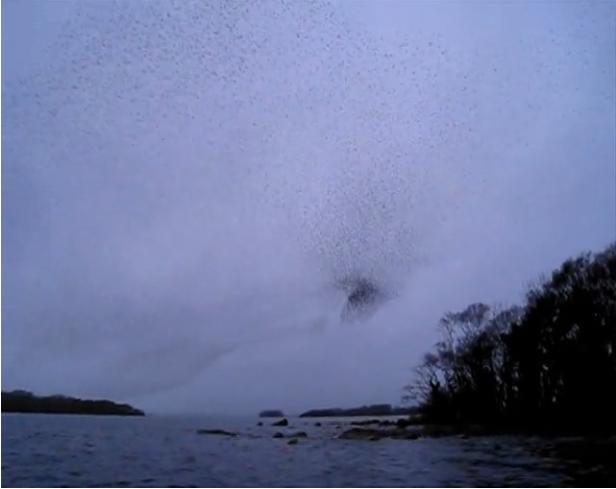
A murmuration of starlings.

A murmuration of starlings.

…or, natural history is eternal, and those who fail to learn from history are condemned to repeat it until they do.

The Blue Angels put on a pretty impressive airshow, but nothing quite like a murmuration of starlings.  Watch the video.  What is possible?

I stumbled across this  beautifully designed website–The Natural Histories Project, dedicated to furthering conservation through natural history and the sense of wonder that it inspires.  It got me to thinking about E.O. Wilson’s idea of biophilia.  While at Cornell, I’d become acquainted with Dr. Harry Greene, one of the interviewees on the site (he was a faculty adviser to the Herpetology Club).   While there, I’d also had the privilege  of taking the best animal behavior class to be had anywhere, co-taught by one of Wilson’s old friends, the late Tom Eisner.  He was a proponent of  stereomicroscopes as a window into an unseen world for children and their parents, and saw the connection between art and science and nature.  He wrote a wonderful book called For Love of Insects.  Natalie Angier wrote this tribute/obituary .

Citizen Science projects are a great way to put your biophilia to work.  Record sightings of butterflies and moths in your area.  Listen for frogs.  Watch for pigeons.

We are in the midst of the largest-scale crisis humanity has ever known–the Sixth Mass Extinction.  It’s already too late for the black rhino.  What can we save?

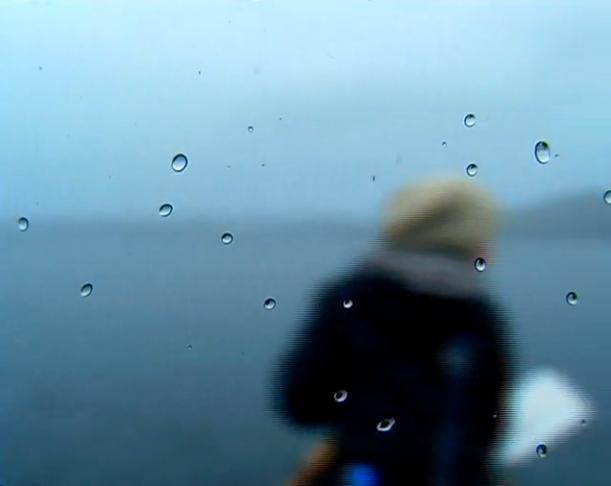
The observer, observed.

The observer, observed.

I learned a Japanese word that I wish I hadn’t–hokenjo.  Such places exist in the same country where a writer made this delightful observation. It’s not all that different from ancient Egypt, where people revered cats and  deliberately killed them for purposes of mummification, or from ourselves.   We love animals and our “shelters” kill 4 million of them a year, often abusing them in the process, and our donations to large national groups go towards protecting the people who do this rather than the animals they do it to.  It is the shadow side of expression.

This article reminds me of the time my husband and I attended a talk by noted cave art expert Jean Clottes, author of (among other things), The Cave Beneath the Sea.  Clottes related a story of how Courtin, one of his colleagues, sent him a fax of a newly-discovered incised drawing found in the cave.  Upon witnessing the image emerge from his fax machine, Clottes initially thought this was some sort of joke, and immediately called Courtin and said so.  The image bore a striking resemblance to drawings of the same subject matter I’d seen incised into desks in high school, but scientific dating techniques revealed it to be many thousands of years old, making this one of Man’s (or at least Adolescent Boy’s) oldest artistic traditions.  Once visible only by the flickering light of torches in ancient painted caves, it is now visible by the 1 meter pixels of modern space satellites, going where no man has gone before.  Alien anthropologists will doubtless consider it some sort of ritual symbol.

No Kill News

This was a big news week in the No Kill advocacy world–it was National Shelter Reform Week, the ASPCA confirmed what many had suspected, and Detroit Animal ‘Services’ really drove home the point of why we need CAPA in every state, when it defied a judge’s order and the will of thousands of animal lovers and rescuers by killing Ace.  It was also the second anniversary of the ASPCA killing Oreo, in a case very similar to that of Ace–variations on a theme of abusing power and killing pit bulls.  One of Winograd’s all-time best posts sheds some light on how and why this is.


This is the second in a weekly series in which I  highlight blog posts, articles and such in keeping with the theme of this blog.  If you have suggestions for posts to include in the next installment of this feature, please leave them in the comments below or use the contact form.