Oct 11 2011

What do killing apologists really think of anti-gassing advocates?

Valerie Hayes

During the 2010 Georgia legislative session, I wrote over a dozen articles chronicling the successful campaign to pass Grace’s Law, banning the use of gas chambers to kill homeless dogs and cats in Georgia’s shelters.  Those of us who worked on that campaign learned a lot–mostly about how the public, often maligned in animal welfare circles, was, in fact very compassionate, was horrified to learn about what went on in places that were supposed to provide a safe haven for the most vulnerable of companion animals, and was moved to act to bring our state that much closer to what it should be.  Ordinary people called and wrote to their Senators and Representatives in droves.

If I had a dollar for every time someone told me that “Southerners don’t care about animals, but up North, everything is just peachy,” I could open a well-funded low-cost spay-neuter clinic tomorrow.  I also know that that’s not true.  More than enough Southerners do care about animals, and there is no shortage of corruption, cruelty and abuse up North–just look at the morass that is NYC Animal Care and Control.

Despite the overwhelming voter support, the campaign had it’s nerve-wracking moments.  There was a sneak attack of misinformation the morning of a vote which was handily repelled.  There were amendments which delayed implementation which had to be mitigated, and who could forget that speech by Senator Heath in which he reminisced fondly about the euphoria-inducing properties of carbon monoxide?  The bill sponsors did what elected officials should do, and in the last hours of the last day of the legislative session, right ultimately prevailed, and the gassing of dogs and cats is now illegal in Georgia.

Which is more than I can say for Pennsylvania.

Anti-gassing advocate Steven Hoover, who used to live in GA and was a member of the Georgia Voters for Animal Welfare’s Grace’s Law team, sent the following letter via snail mail to all Board members of the Federated Humane Societies of Pennsylvania:

To: The board and members of the PA Federated Humane Societies
From: Steven Hoover, St. Marks Episcopal Animal Welfare Director
Subject: Your continued use of savage gas chambers
Despite the efforts of many PA citizens who TRULY care about animal welfare, especially our loving and innocent companion animals, you still engage in the barbaric practice of gas chamber use, in the full knowledge of how cruel and antiquated these chambers are. Many COMPETENT agencies involved with animals have adamantly spoken out against chamber use – The Association of Shelter Veterinarians, National Animal Control Association, and American Humane, just to name a few.
Tragically, your callous indifference extends to your workers in the shelters who use these chambers as well. It is well documented that there have been many serious injuries to workers in shelters that used chambers. One shelter worker in Tennessee even died from carbon monoxide exposure. If this happens here in PA, what will be your excuse and justification for this taking place?
In the past few years, eighteen states have outlawed chamber use and reverted to the only kind and merciful means of euthanasia [sic–unless they are irremediably suffering, it’s killing]  – EBI. What is that word in your association’s title again? Oh yeah – humane. Your ghastly and ghoulish use of the chambers is the very antithesis of the word humane. I seriously doubt any of you have witnessed a chamber execution. Well I have. I have seen the terror in the animals eyes. I have seen them attack each other in panic. I have seen them defecate and urinate on one another. To keep using these chambers and call yourselves humane is absolute hypocrisy in the extreme.
Those states who now only use EBI faced the same challenges and problems that you face to make the switch and yet made the change you claim is impossible for you to make – eighteen times over. If this board and members do not have the competence, intelligence, and capability to do what eighteen other states have recently done, then it is time for you to step down and let others who have these qualities take over to insure the trust of PA citizens you have abused.
With disgust and revulsion,
Steven Hoover
OK.  He’s upset and frustrated, but he’s also absolutely right about gassing being cruel and antiquated and something that a growing number of animal groups (even ones not usually considered progressive, such as NACA) have come out against.  Georgia, on the other side of the Mason-Dixon line, where people aren’t supposed to care, has banned gassing.  He’s absolutely right that no one who supports or is indifferent to continued gassing, has any business usurping a position that rightfully belongs to a real animal advocate, someone who would put an immediate stop to this gratuitous cruelty.
How do you think members of the Board would react to this letter?
In one case, that of Karel Minor, also of the Humane Society of Berks County, we know.  He sent the following email reply, under the subject line “Is there room on that high horse of yours”:
Dear Steven,
I received your kind letter. Until I received it, I had no idea that I was using a carbon monoxide chamber but apparently I am and was simply completely unaware of it. Of course, I am obviously being as broadly sarcastic and you were being broadly and inaccurately accusatory. The fact that some member of Federated Humane Societies of Pennsylvania uses- legally uses, I should add- a carbon monoxide chamber no more brands the rest of its members “ghastly and ghoulish” than the obstructionist and hypocritical actions of PVMA make my staff veterinarians obstructionist hypocrites. Or the cynical blocking of a bill to ban chambers by some members of the legislature brands the members who have sponsored chamber ban legislation cynics. Or for that matter, those in your neighborhood aren’t boorish Johnny Letters just because you opt to be.
Allow me to clarify reality for you. PA Federated has publically [sic] endorsed chamber ban legislation. We have actively lobbied the legislature to bring a bill up for a vote. We have worked hard to find language which would not be blocked by the parochial interests of the PVMA leadership (which as we know is not an animal welfare group intended to protect animals but a professional affiliation group intended to protect their “industry”). Where I say, “we”, I also mean “I” because I have personally spent a great deal of time on all these things. To my knowledge a single non-profit shelter uses a chamber and have expressed their desire to no longer do so. However, without the DEA license of a veterinarian or legislation allowing direct shelter licensing, their alternative is not EBI, it is closing their door to animals completely and in their determination, that would result in further suffering. You are probably not aware that I attempted to arrange to have my staff veterinary licenses extended to that organization but I was prevented from doing so at risk of losing my organization’s insurance and being forced to close my doors.
You have the luxury of not facing what that shelter faces. You have the luxury of tarring all with the same brush from your mount on your high horse because you don’t have to make real world decisions. Just because you don’t see us wandering around Harrisburg wearing a gas mask and scaring off legislators doesn’t mean we have not been working hard on this issue and that we don’t care about it. Further, the fact that someone even uses these devices does not even necessarily mean they are happy about. So as neighborly as you are with your offer of advice for all of us, I’ll politely decline the ever so useful guidance you offered in your recent missive.
I want to draw attention that I am replying on a non-HSBC email account [worlddomination@thelastpunk.com]. I’m doing so because I am taking a rare and uncharacteristic step. That is to provide you with the response that you deserve in the strict clarity with which it should be delivered. That sort of directness is not acceptable via a professional email, so I am sending it to you, person to person. I want you to know I have given a great deal of thought to the best and most concise reply which best addresses your uncharitable, mean spirited, vitriolic, and petty attack on a group of people of whom you no little or nothing.
That response is this: Mr. Hoover, please go fuck yourself. [emphasis added]
Karel Minor
OK.  He did say please, but it’s the other stuff he said that I’m concerned about.
  • If he and his organization have campaigned against gassing, why did he take this so personally?  The level of vitriol has me concerned.  Mr. Hoover obviously struck a nerve.  His reaction leads me to believe that his conscience is other than clean about this.  If he truly believed that there was a misunderstanding, why not just calmly present the facts and clear the air so that everyone could work together to ban gassing in Pennsylvania?  Why the vitriol, or the  misreading of Mr. Hoover’s original letter?
  • He emphasizes that the use of the gas chamber is legal.  The issue here is that it is wrong.  Not cool.
  • “To my knowledge a single non-profit shelter uses a chamber and have [sic] expressed their desire to no longer do so.”  He should be able to state this information definitively and completely.  The phrase “to my knowledge” indicates that he is not sure.  Why is he not sure?  According to this article, there are may be three.  How many are there?
  • The statement “…their alternative is not EBI, it is closing their door to animals completely and in their determination, that would result in further suffering.”  In my opinion, this is far worse than Mr. Minor’s invitation to masturbate.  No, those are not the two alternatives.  A professional should keep track of trends in their ‘business’.  The biggest trend in animal welfare in the past hundred years is the No Kill movement.  The No Kill Equation is the only viable alternative (pun intended).  The 90% Club is hardly a secret society.
  • He seems to be arguing that since their jobs are so hard, they should get a pass for committing cruelty.  Call yourself a “Humane Society” and cruelty becomes legal, your job is so incredibly hard, unlike everyone else’s jobs, and you are free to wallow in self-pity over your acts of cruelty, and everyone else should feel sorry for you too.  Shades of “blame the public”.  Cry me a damn river.
  • His attitude is one of a member of a private club, and he is acting as if his organization is operating in a vacuum.  The reality is that to ban gassing, or to accomplish anything on behalf of shelter animals, you have to muster the support of the animal-loving public.  You do not accomplish that, if I may be so “direct”, by writing responses such as the one above.
Mr. Hoover is not alone in seeing Karel Potty-Mouth’s Minor’s organization as part of the problem.   According to the article mentioned above:
We don’t know how many animals die this way or who is doing the gassing because the Federated Humane Societies of Pennsylvania – the umbrella group representing the three remaining shelters in the western part of the state that use carbon monoxide to euthanize animals – won’t reveal the names of the shelters fearing retribution by activists.
Retribution?  Just what are they thinking?  How about some facts instead of vague accusations?  During the campaign for Grace’s Law, I published the list of all known gas chambers in GA repeatedly.  At the start of the campaign, the GVAW  knew of 11, but because of the publicity, we were informed of two more, bringing the total to 13.  If there was any “retribution”, those lonely few who defended gassing would have shouted it from the rooftops.  There was none.
Banning gassing in PA should be a slam-dunk, being North of the Mason-Dixon line and all, and likely having fewer chambers, and therefore less “investment” in their continued use than GA or WV or AL.  Gassing continues because the Pennsylvania Veterinary Medical Association, for reasons I can’t fathom, is blocking it, and because the Federated Humane Societies of Pennsylvania is “protecting” “shelters” who still gas from the very people who could take them from gassing to No Kill if only they knew and had the right leadership–the animal-loving
public.
The fact that the exact number of chambers is a secret tells me that they are being operated by nonprofits–that donors are unwittingly funding animal abuse.  Pennsylvania has an Open Records law, so municipal, taxpayer-funded  pounds would be required to disclose if they gassed.  This whole situation is as disgusting as it is tragic, and it’s pretty damned tragic.
An organization or leader truly committed to saving animals would:
  1. Do things for animals.
  2. Tell people about it.
  3. Ask for help.
Which in no way resembles:
  1. Kill animals in the gas chamber.
  2. Try to keep it a secret.
  3. Tell people to go frack themselves.

This isn’t rocket science.

Mr. Minor, pretty please with sugar on top, implement the No Kill Equation. [emphasis mine]

Sep 1 2011

Imperial Moth

Valerie Hayes

Imperial Moth


Was surprised by this big guy fluttering around the porch light last week. Obviously a Saturniid, but one I had never seen before. This sighting prompted me to stumble across the Butterflies and Moths website and this wonderful article from 3 years ago:  The Butterfly Effect.

These large Saturniid moths are becoming increasingly rare, threatened by something you might not think much about–light pollution, which disrupts their normal behavior, preventing them from reproducing and leaving them vulnerable to predators.  This species figured in the books ‘Moths of the Limberlost‘ and ‘Girl of the Limberlost’.


Imperial Moth 1 | Flickr – Photo Sharing!.


Aug 20 2011

Shoals Spider Lilies, Flint River, GA

Valerie Hayes


Hymenocallis coronaria, a rare and beautiful flower with an unusual habitat–in among rocks in clean, flowing water.  To photograph them, you have to wade out into the river with your camera.  Because of their specialized requirements, they make lousy garden plants, yet collecting is one of the things that threatens them, that and the loss of their habitat.  It is still possible to find rare wonders if you know where to look, and you don’t necessarily even have to travel very far…


Shoals Spider Lilies-2 | Flickr – Photo Sharing!.


Aug 13 2011

What they said: notable quotes from day 2 of No Kill Conference 2011

Valerie Hayes
No Kill Conference 2011 logo.

"Fight the Power!"

Day 2 continued the whirlwind begun in day 1 of No Kill Conference 2011.  There were many more talks than any one person could possibly–so many more that two people could attend every session and have no overlap in content.  Brent Toellner, one of the presenters from yesterday, has a collection of links to blog posts on the conference overall and on particular presentations.

Attorney Kate Neiswender on ‘Legislating No Kill‘:

Politicians have a long memory for the people who help them.

Legislators love numbers.

You will find help in strange places.

An editorial in support of your bill in the local paper is legislative gold.

Diane Blankenberg of Nevada Humane Society on ‘Harnessing Community Compassion’:

 “Opportunities multiply as they are seized.”  –Sun Tzu

Volunteers are ambassadors in the community.  They will tell other people about their experiences.

The average volunteer is with the organization for 90 days.  That is a lot of turnover.  make it easy and flexible to be a volunteer.

Get rid of patronizing rules.  They are unwelcoming.

The focus is on fun.  Match people with what they want to do.  Challenge them to name a skill that they have that can’t be used by the shelter.

Reach out to the media.  Be responsive to them and they will be responsive to you.

Keeping volunteers is a challenge.  People need to feel like they are using their talents.

“Enthusiasm is contagious.  Start an epidemic.”  –Don Ward

Create positive experiences.

Example of a car decal given to volunteers at a recognition event:  “I’m a Nevada Humane Society foster parent.  I save lives.”

Your program doesn’t have to be perfect.  It is a work in progress.

We make it easy for rescue groups–they can have any animal they want at no charge, and we help with spay-neuter.  We don’t complain about ‘cherry-picking’–we’re glad to let them have animals.

“The combined force of a thousand sparks makes a powerful bolt of lightning.” –Arlo Guthrie

During lunch Nathan Winograd spoke about leadership:

For so long, the bar has been set so low that we get excited about crumbs, but we deserve more.

What is the most important characteristic of a leader?  I would argue that it is imagination.

Directors of kill ‘shelters’ need to ask themselves:  “What do you want your legacy to be?”

It is never too late to do the right thing.

Excuses will be proven false.

Imagination = Lifesaving²

Robyn Kippenberger of the RNZSPCA spoke about “Leadership” (do you see a theme here?):

Proverbs 29:18–”Where there is no vision, the people [and animals] perish.”

You need to re-sensitize  people, many of them have killed for a long time. You have to come forward and let yourself feel in this work.  If you don’t, your heart is not in it, the passion isn’t there.

Imagine that the animal before you is your animal.  If you do not, then you are not doing the best for that animal.

Save one life at a time, with the intention of saving them all.

“When placed in command, take charge.”  –General Norman Schwarzkopf

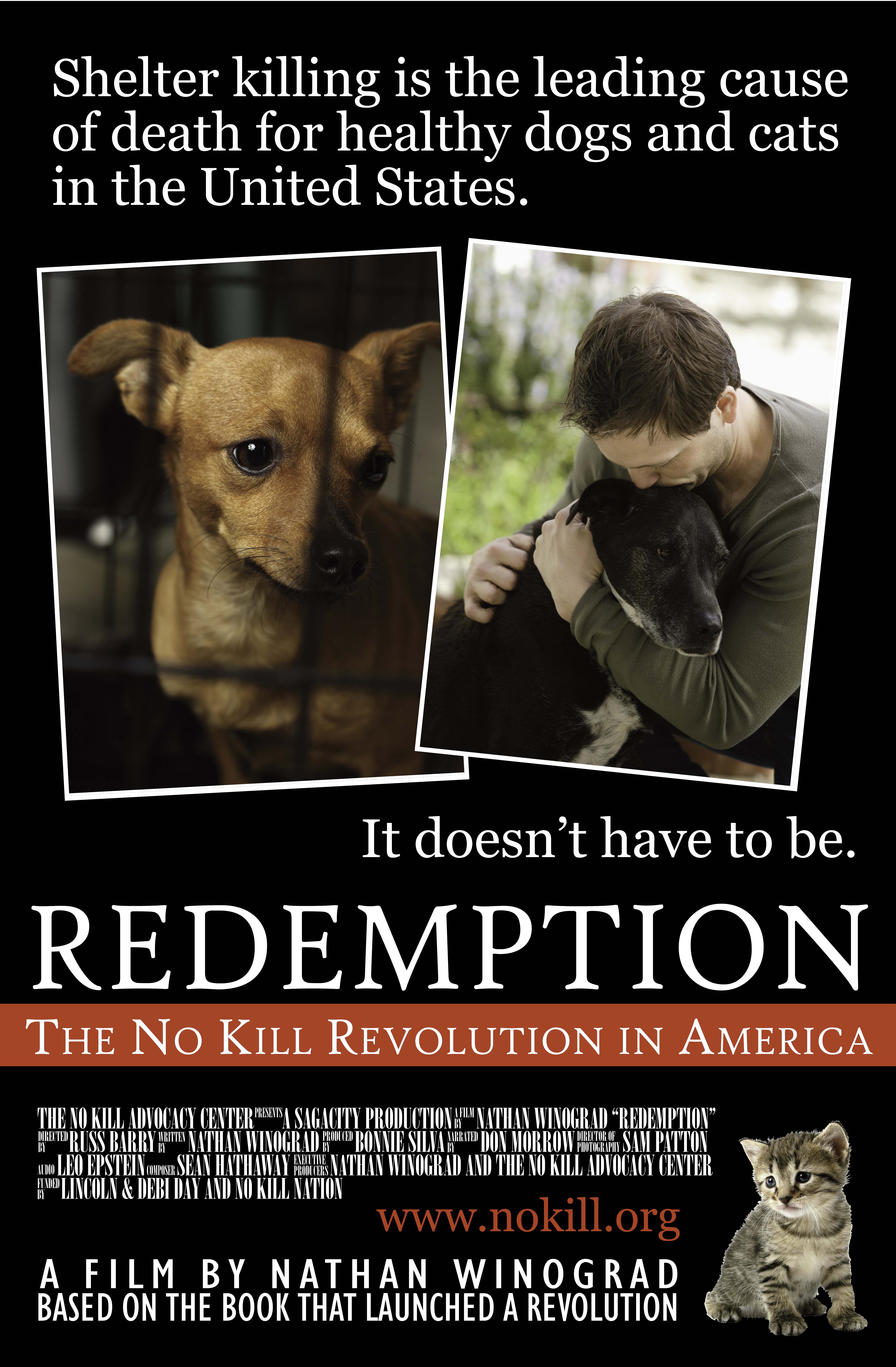
With leadership comes responsibility.  When you know this stuff [the stuff in Redemption], you can’t un-know it.

We bring joy–and so much more.

“You must do the thing you think you cannot do.”  –Eleanor Roosevelt

It’s the “Can do!” that will save lives.

My philosophy is, if we’ve got money in the bank, we should be spending it on saving  lives.

“Neuter is cuter.”

Storytelling is part of bringing people into the circle, into the tribe, and people will remember and tell the stories.

“To the world, you may be just one person, but to one life, you may be the world.” –Anonymous

Christie Keith spoke about “Getting Your Paws on More Media”:

Many media figures have pets, but few really understand your issues.

Your best media contacts may be weather guys, sportscasters, movie reviewers, etc.  They have pets or their audience does.  Their audience is unexploited territory for you!

Think of it as courtship, relationship-building.  Don’t ask for something right away.  For 20 you reach out to, you will be lucky to get one.

Journalists are used to being reached out to, so get over your shyness and be more professional.

Cute animals are the greatest PR tool ever.

Before you send a press release, put it on your website, or at least as a Facebook note.  Journalists must be able to link to you.

Bloggers have more influence than their readership numbers may indicate.  When you have a cause, you want to target influencers.

Reporters may have relationships with regressive shelter directors.  Never target them or tell them that they are wrong, reach out to them on a human level.

Be professional and brief.

It takes an enormous army of people, of the dogs themselves, an enormous wave, to combat the propaganda against pit bulls that’s out there.

Journalists get frustrated when people want to tell them what the story is, especially if it’s controversial.  Your goal is to get attention.

Remember the difference between advertising and news.

Investigative journalists are few and far between.  Bloggers are filling this niche.

Is it a story?  Does it have a hook?  is it interesting?

Set out to be newsworthy (like Bonney Brown).

From the closing remarks by Nathan Winograd:

Lifesaving is the only criteria of success.

The status quo will call you crazy.  But No Kill is far from crazy.  Every new idea has been called “crazy”.

“‘We’ve always done it this way’ never justifies anything.” –Mitch Schneider

Most resistance to change is laziness.

“Be bold and mighty forces will come to your aid.”  –Goethe

No Kill represents nothing short of a paradigm shift in animal sheltering, a completely new, rigorously positive, forward-thinking way, and that is perhaps the hardest part, especially if you have been steeped in the old ways, especially if you have killed animals.  The rest is just work.

The public–those people you’ve been led to believe were the enemy, the ones that criticize shelter killing–they’re the key to saving lives.  If you stop punishing them and yourself, and ask them for help, sincerely ask them, and if you commit yourself to laying down the needle, you will be amazed at what can happen.  There is a groundswell of change in the world of animal sheltering.  You can choose to be a part of this lifesaving adventure, or you can fight it bitterly for a time, kill some more animals, make some human lives that much more miserable, and then be swept away.  We’re past the point of no return.

Spaying and neutering and humane education are not “the only way”, they put off success until some vague time in the future.  They will do nothing to stop the rampant gratuitous killing and abuse in shelters today That is the task before us.  People want to save lives now, and we have a proven model for doing so.  Join the growing list of No Kill communities by following the No Kill Equation.

It has worked everywhere that it has been wholeheartedly implemented–Shelby County, Kentucky, Marquette, Michigan, Tompkins County, New York, Austin, Texas, Reno, Nevada, and in communities in Australia and New Zealand.  It doesn’t matter if the community is urban or rural, in the desert or in the mountains, on an island or on the mainland, in a politically liberal or conservative area.  It doesn’t even matter if you drive on the left side of the road.

It works.  No excuses.


Aug 11 2011

Notable Quotes From Day 1 of No Kill Conference 2011

Valerie Hayes
No Kill Conference 2011 logo.

"Fight the Power!"

The following are from my notes taken at No Kill Conference 2011 in Washington, DC July 30-31, 2011.  I have tried to get these quotes as exact as possible.  I’ll be posting more extensive write-ups of some of the talks I attended.  The conference was a heady and exciting experience.  Despite being at the same venue as last year, it seemed bigger, almost overwhelming, even.  Last year’s theme was “A new day dawns”, and this year, we are seeing the results.  I used to have the list of No Kill communities and those closing in on joining the ‘90% Club‘ memorized.  I can’t keep track of them anymore.  No Kill initiatives are popping up everywhere, testament to the theme of this year’s conference–the power of individual No Kill advocates to lead and to make a difference in their community and beyond.  The refrain throughout Winograd’s keynote address set the tone: ” One person. One moment. One decision.”

Nathan Winograd, director of the No Kill Advocacy Center,  from his opening remarks:

Killing an animal is never an act of kindness, especially if the animal is not suffering…We have recognized the value of the full expression of our values…One person can change the status quo.

It took a fight in Austin, Texas.

Whether Austin’s emerging story is your story depends on: one person, one moment, one decision.

We want to leave the darkness.  Our love for animals is not unique as we have been led to believe…History will vindicate us.

Our battle is against the few, not the many–the vested interests.  Millions of lives could be saved if you find the courage.  They will fight you.  They will attack you.  They will ridicule you.  You have support.  We have your back.

The No Kill revolution starts with you.  Go give ‘em Hell!

From ‘Advocacy Blogging’ with Brent Toellner of the KC Dog Blog and Shirley Thistlethwaite of the Yesbiscuit! blog:

Opinions are fine, facts are better.

[crickets] ~On how to win friends through advocacy blogging (i.e. you won’t).

From ‘Shelter Medicine for Non-Veterinarians’ with Dr. Diana Lucree of the Nevada Humane Society:

Every place has different challenges, and many excuses.

Feral cats–for those who like a little spunk in their cats.

Every animal is unique, and a potential source of infection.

Your intake protocols will make or break the health of the animals in your shelter.

Plan for days of high intake so that your intake protocols do not suffer–July 5 or days after high winds.

There’s somebody out there for everybody.

Most diseases are benign, but can be deadly in the shelter environment.

The take home lesson:  follow your intake protocol, never deviate from it!

From Seth Godin’s talk ‘Be the Tribe Leader’:

You don’t have to reach everyone.  Give people something to believe in and talk about.

People are waiting for someone to organize them, but nobody joins a boring movement.

We are all weird.

Bring humanity to a problem, not a manual.

People want you to fit in so they can ignore you.

There is no map.  You have to figure it out.  Report what works.  Make the map.

We need people who can solve interesting problems.

Replace fear of the unknown with curiosity.

Emotional labor–doing what scares you.

How was your day?  Leaders are never ‘fine’.

To stay put, argue about minutiae.

From ‘Overcoming Internal Obstacles to Success’, with Michael Linke, CEO of the Royal SPCA in the Australian Capital Territory and the State of Tasmania in Australia:

We’re in the business of saving lives.

Temperament testing as a tool for euthanasia is rubbish.

Staff turnover is not a bad thing.  Cemeteries are full of people who thought they were indispensable.

It is better to lose poor staff than to compromise animals.

Why bother?  We can fall into the trap of not bothering, but this is life or death.  Remove obstacles.  Remove excuses.  If there is still a problem, remove staff.

You need to micromanage at the start, need to do something immediately.

From Alan Rosenblatt’s talk ‘Here Comes Social Advocacy’:

Social media is about reciprocal relationships, not just two-way communication–your audience talks to each other while you talk to them.

Audience size doesn’t necessarily matter–quality is more important.  Size is good if it includes the right people–influencers.

Now consumers of content, not producers, determine distribution.

Tumblr is great for animal pictures (one of the best marketing tools in the world) and can be linked to twitter and Facebook.

Manage your social media–tweet 2-3 times per day.  Ten minutes per day can be very effective.

‘How to’ is still being figured out.

Just a sampling of snippets from day one.  I’ll cover day two in my next post.  The ideas were flying fast both in the sessions and during the ‘downtime’, and I got to meet many interesting people.  Some you’ve heard of, others you haven’t heard of yet. To be in a room with hundreds of people who ‘get it’ and are generous with their expertise regarding how to ‘get it done’ is a powerful thing, and something to keep in mind when you are in a room full of people who don’t yet and some who may never.

“Fight the power!”